

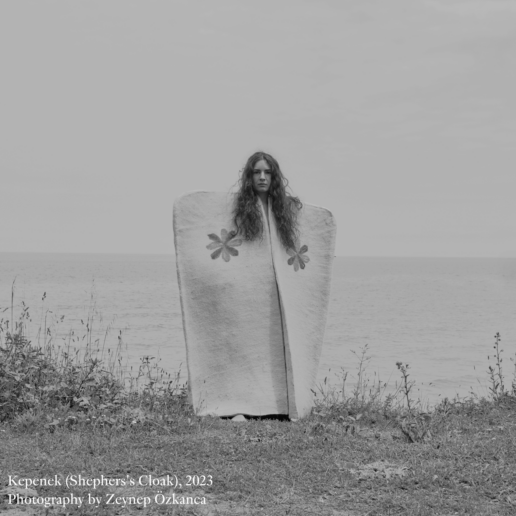
A Cover Shaped by Memory
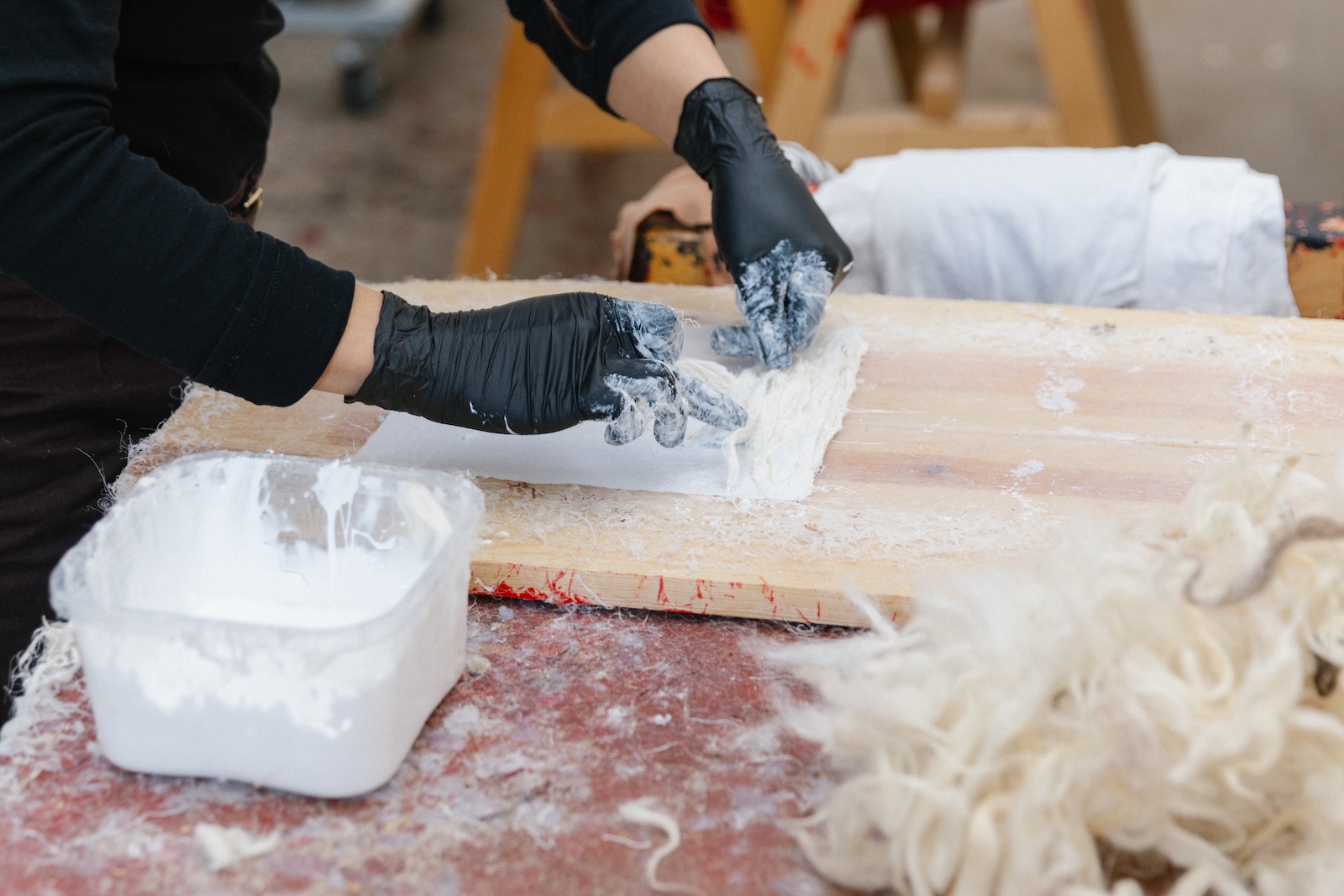
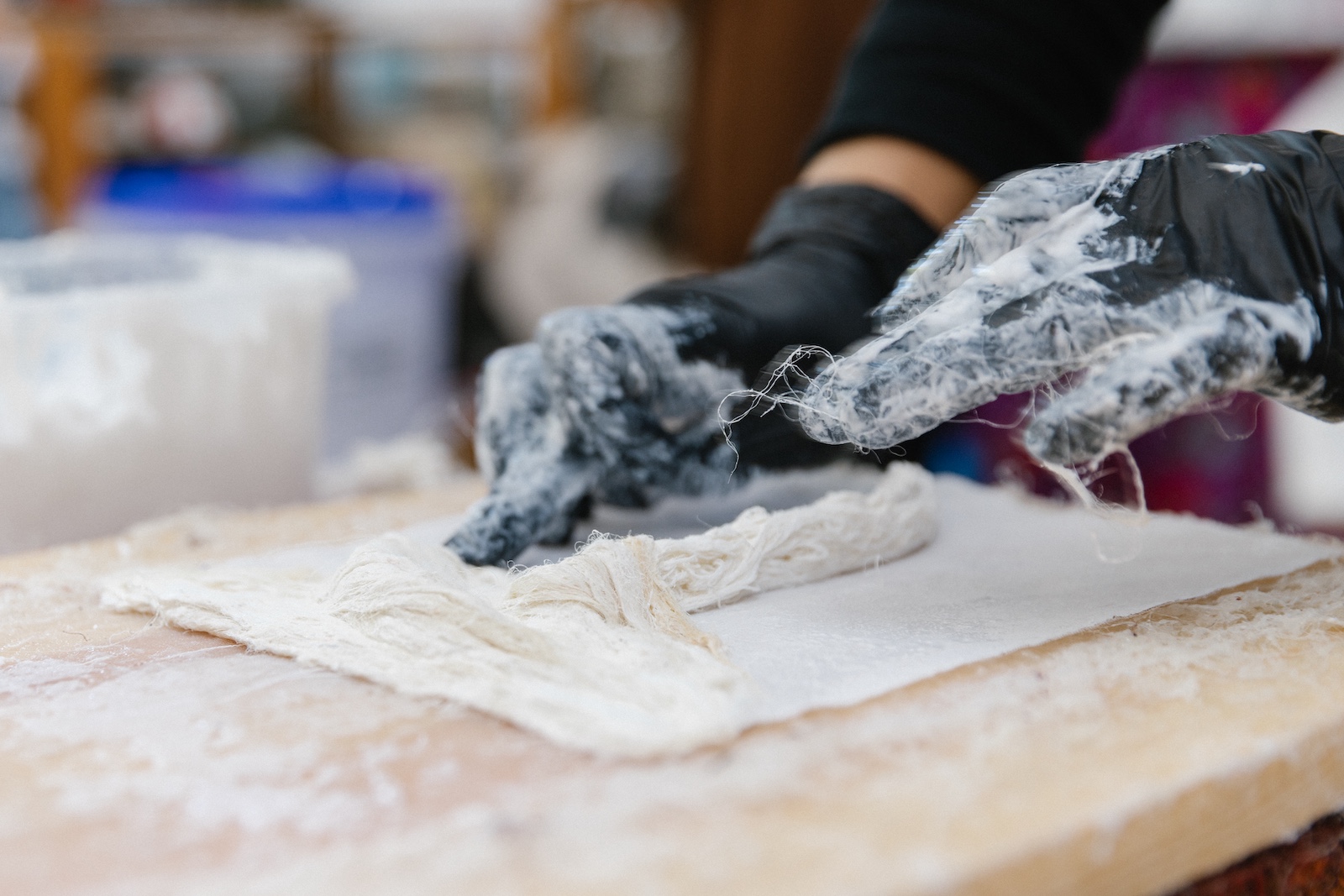
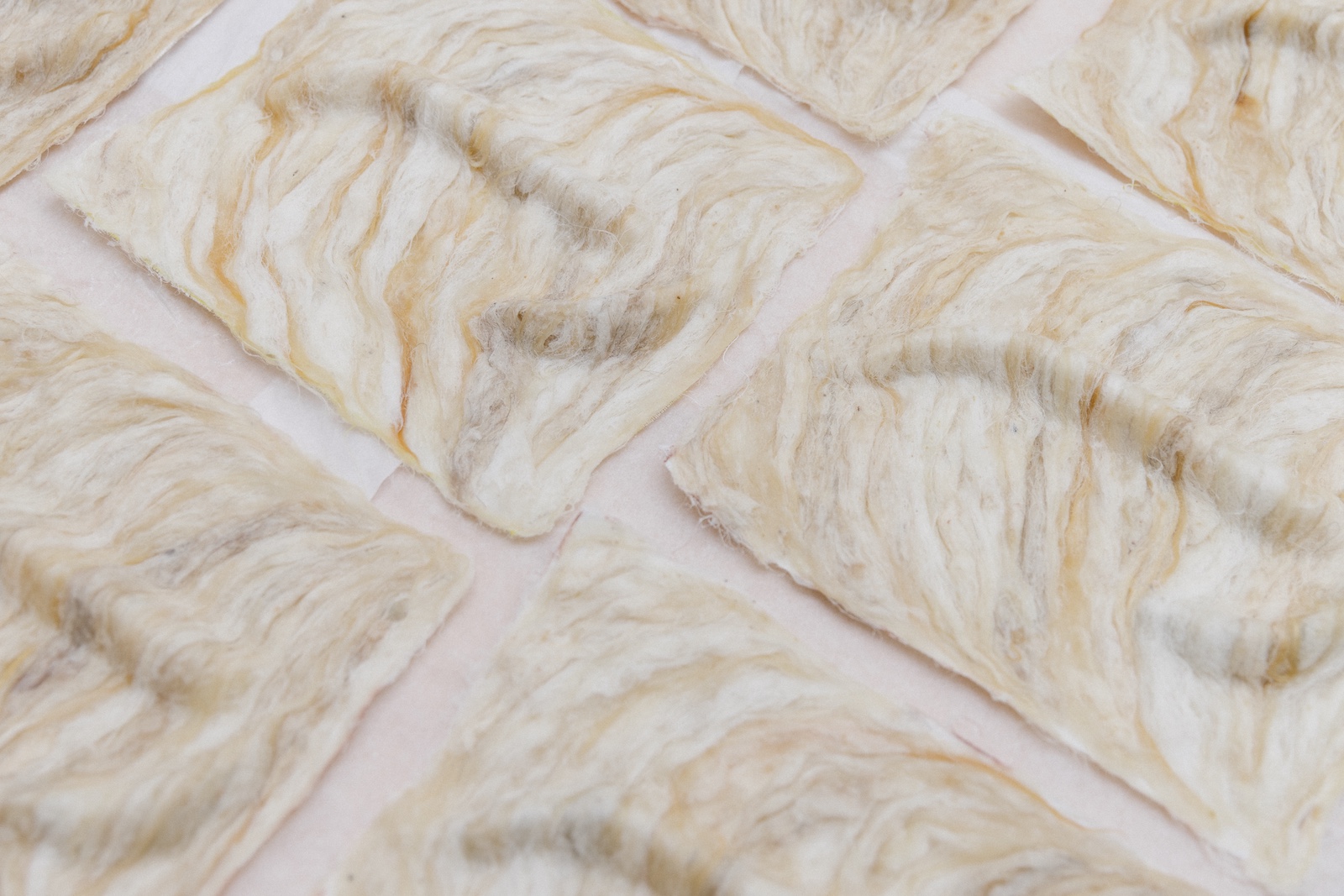
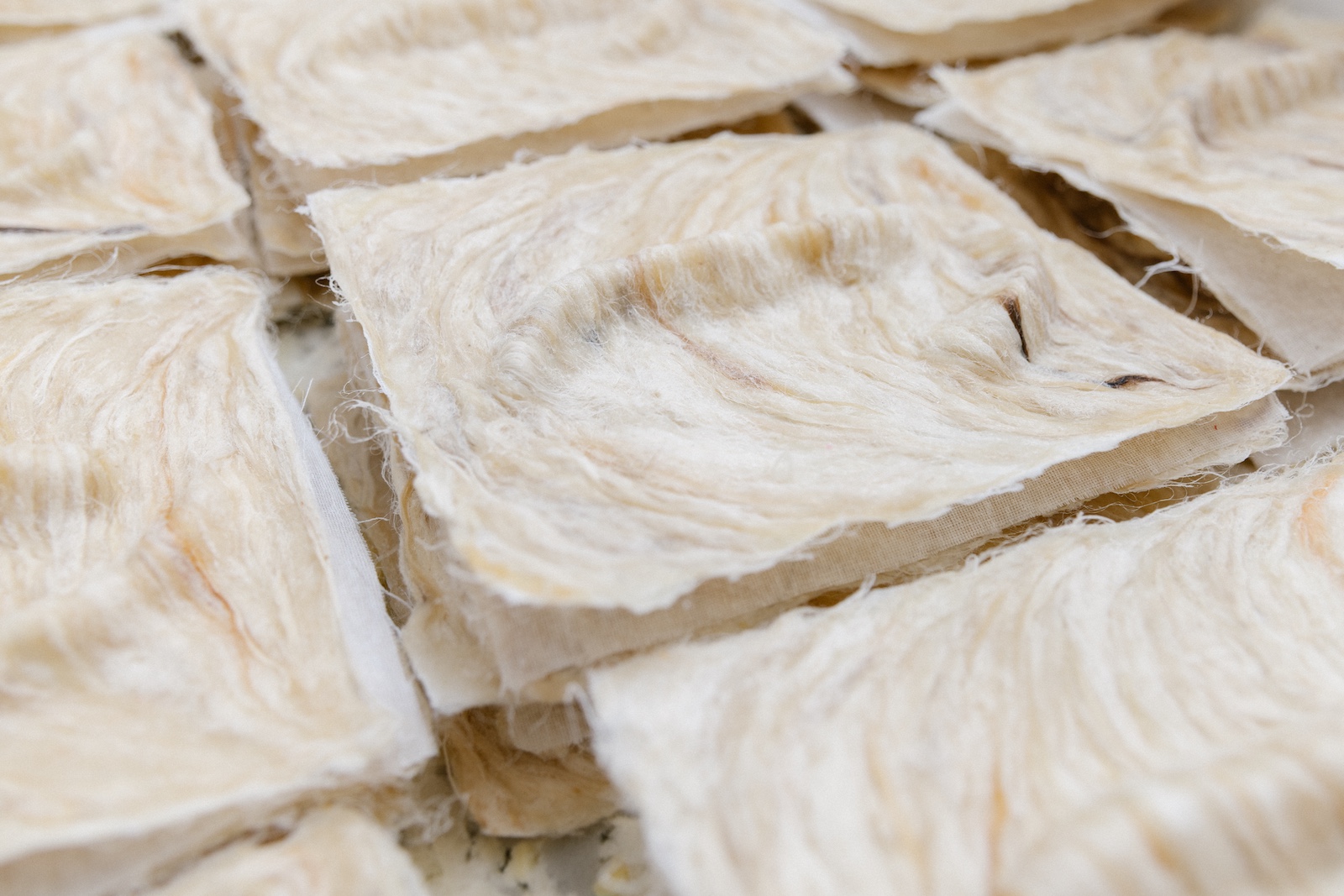
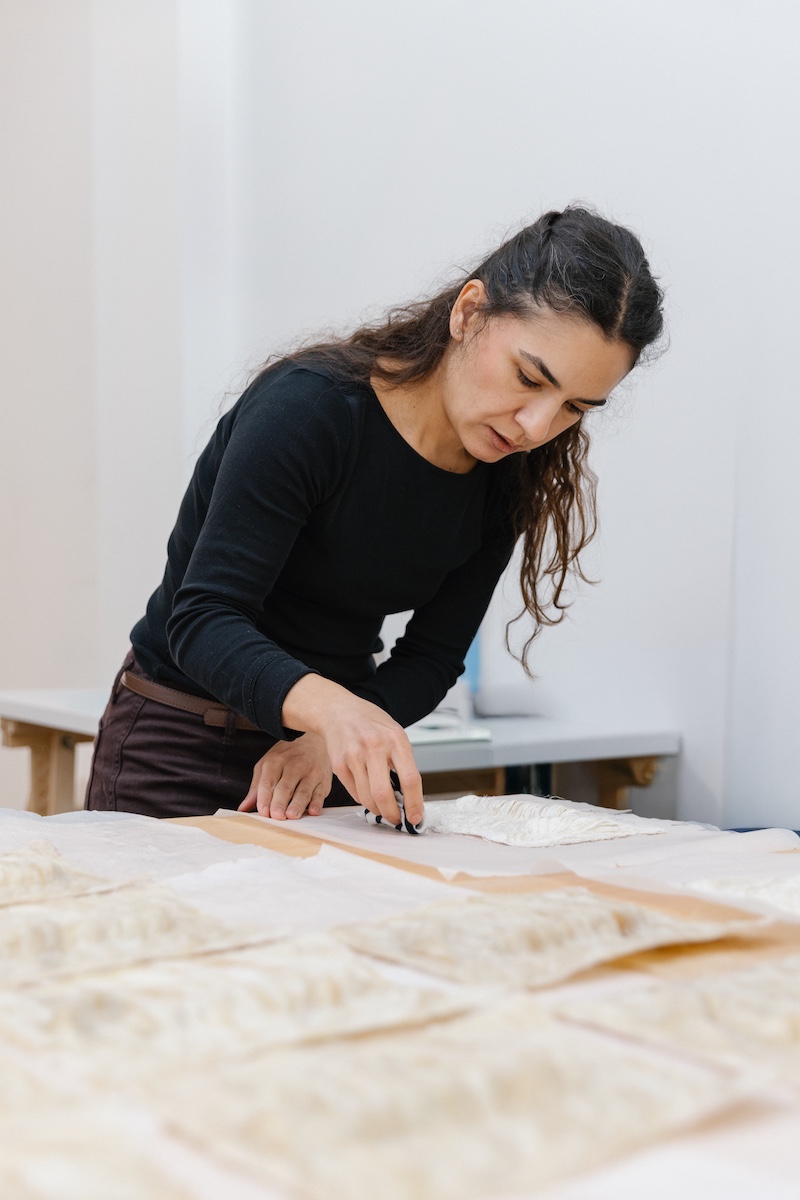
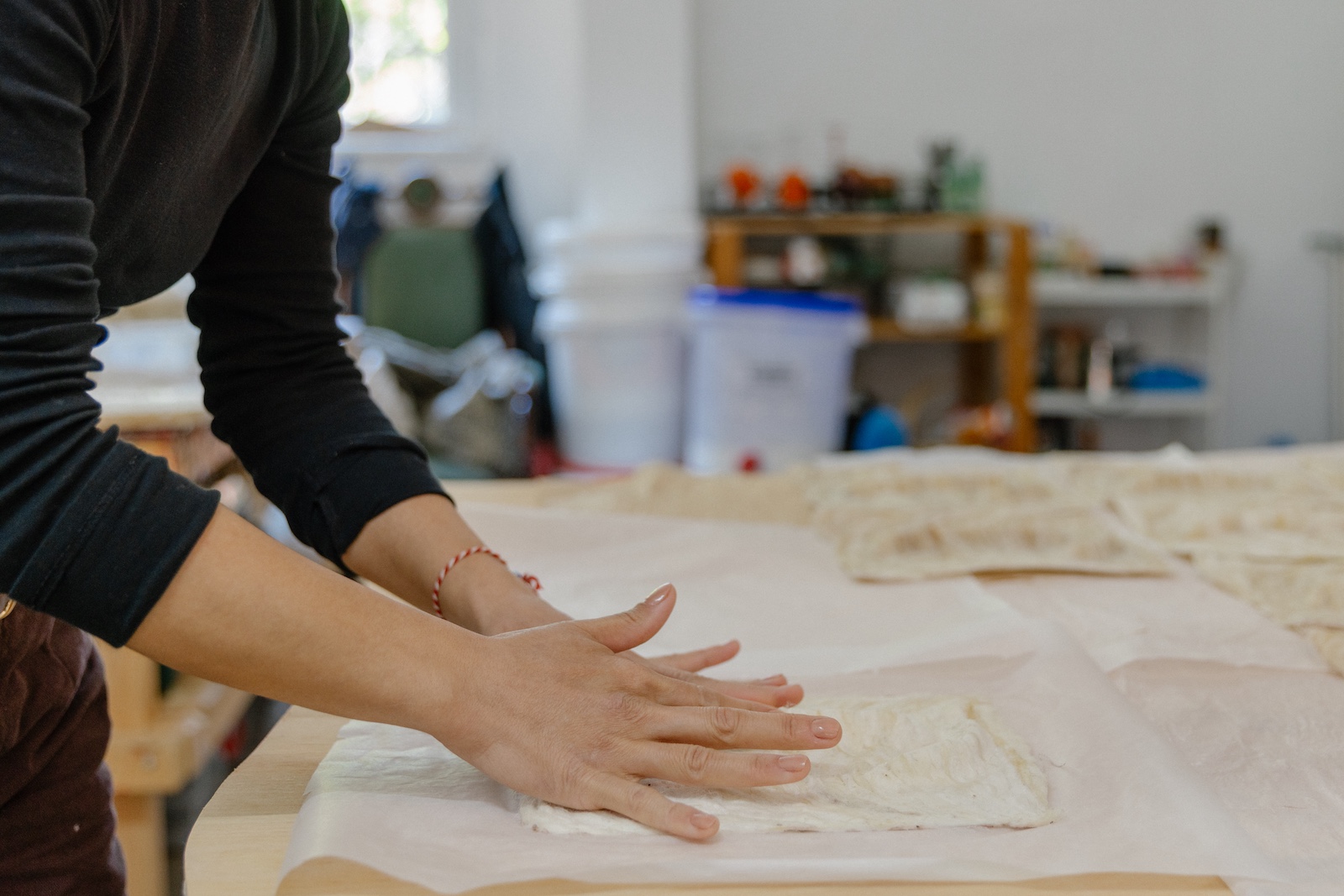
PAPER set out to create an exhibition-in-print, exploring the intersections of contemporary art and craft. For our cover, we brought that idea to life by producing 1,000 individual pieces inspired by the large-scale woollen sculptures of Betül Özkan, one of the artists featured in our magazine-gallery. These unique forms emerged through a physically challenging and repetitive creative process: wool sourced from Anatolia was first sorted, soaked, shaped for forty minutes and then left to dry. At her studio in Yeldeğirmeni with arabesque fanzine music playing in the background, we spoke with Özkan about her artistic cover, Anatolia’s culture of craft, the memory that lives in wool and the wisdom of the hands.Photography Nazlı Erdemirel
PAPER The thread-and wool-based forms in your solo exhibition “In Pursuit of the String” in early 2026 were truly remarkable. How did you decide to work with wool?
Betül Özkan I began working with wool, not for any technical reasons, but because I recognised its potential. It feels highly layered to me because it’s organic and textural. Wool carries the story of a living creature who wore it as well as a history of cultural practice. That is why it’s not just about shaping a form but also about establishing a relationship with the history it holds.
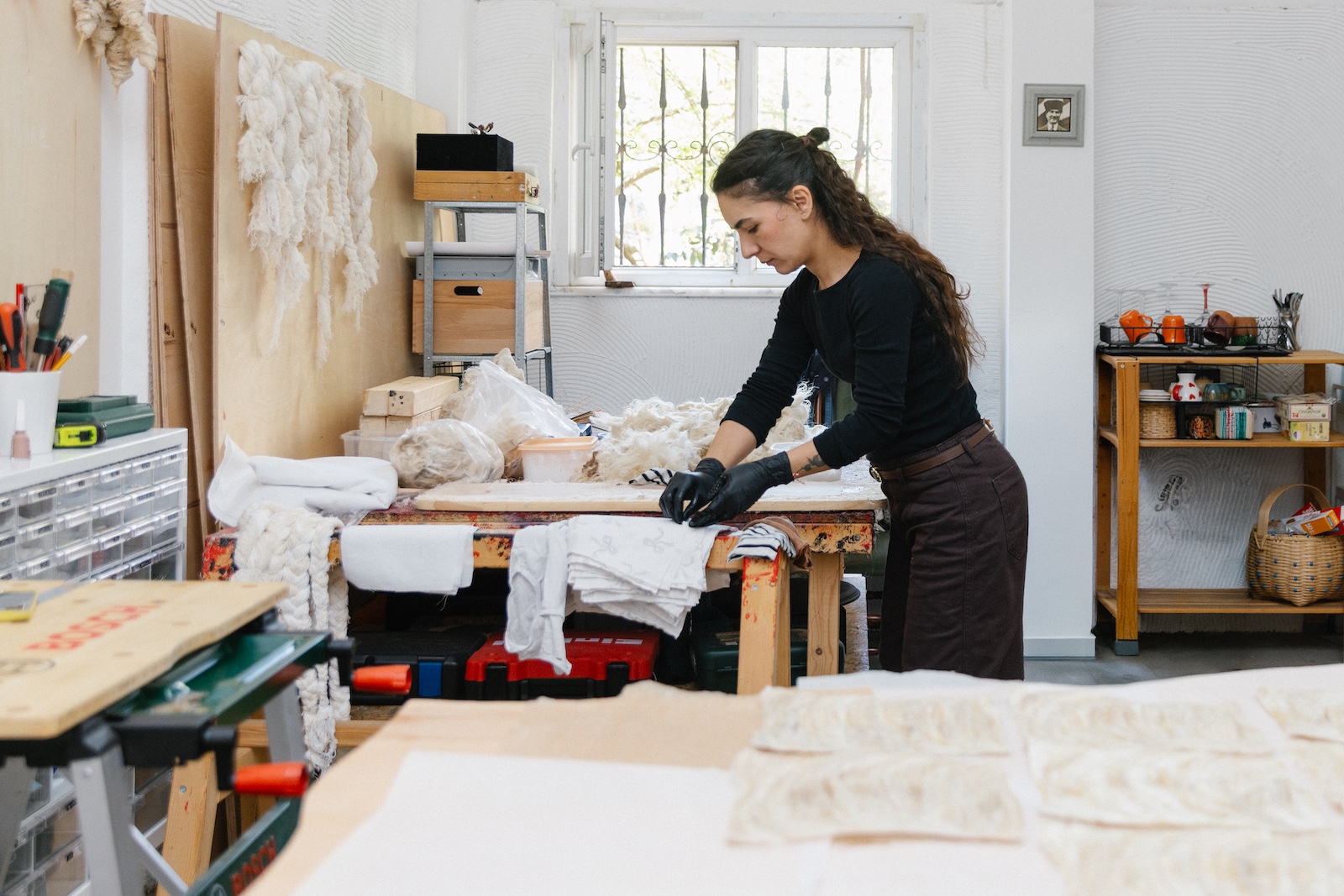
P We see that the work you’re preparing for PAPER’s cover is in the section of your studio you call “the oven.” Have you fabricated three hundred pieces yet?
BÖ I’m at 200 right now. (Smiles.) It often takes time for me to come to an agreement with the material. The first tranche was completed slowly but there is a rhythm to the process. It may look as if we made only two hundred pieces in one month but now I’m progressing faster, in batches of ten. At the beginning, it was three at a time, so the rhythm has changed. If we continue at this pace, we’ll be able to produce four hundred pieces this month.
AN INSTALLATION OVER 100 SQUARE METRES
P Did your mind struggle when shifting from the large-scale work you usually do to these small pieces?
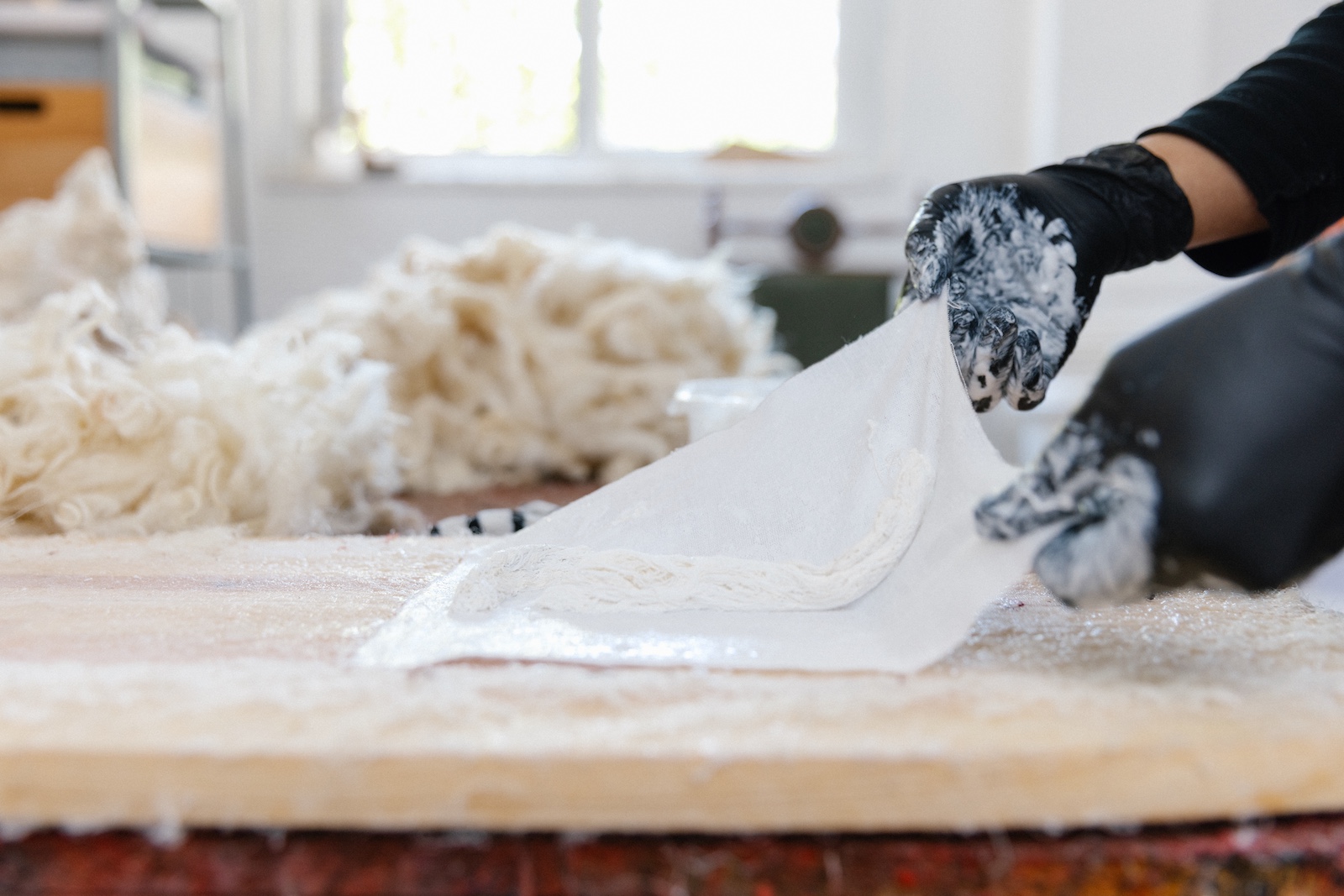
BÖ If I were making three per day, it would take a year. Now, one piece takes about 40 minutes if the wool, fabric and thread are ready. If not, it can stretch to an hour and a half. Once all of these are spread out on the floor, they will eventually cover 100 square metres. In that sense, it’s actually a very substantial body of work.
P How does your body synchronise with production processes like this that require so much patience and endurance?
BÖ I have very high stamina and, for some reason, I seem to be drawn to oversize work. This is the first time I’ve embarked on a journey like this. It’s both enjoyable and made up of many different stages. Lately, this takes around ten hours of my day and occasionally I feel as though my body is being tested. I’m learning to manage it better through exercise. (Laughs.)
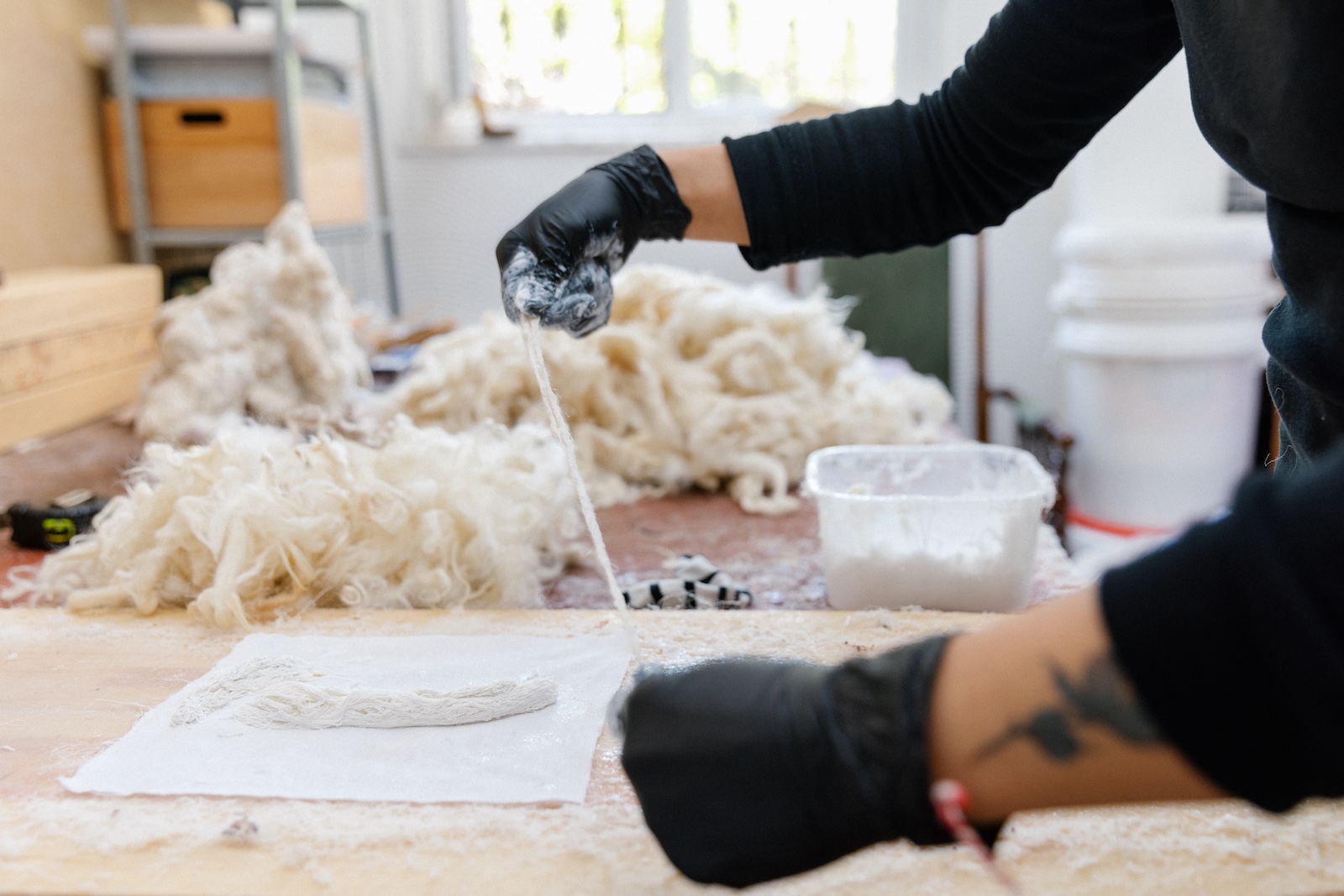
There are days when we take the wool home, sort through it there and then bring it back to the studio. The material is quite clean, but it still needs to be separated tuft by tuft, according to its shape and level of impurity and then carefully cleaned around the edges. After shaping it with an adhesive we leave it to dry on the worktable under heaters. The drying time is about a day and a half. I’m happy that this project, with its many small acts of shaping and repetition, has become such a multilayered experience for me. It feels like something I will carry with me for a long time.
P What do you like least about wool and most about cotton?
BÖ Wool has an unpredictable side. Because of its fiber structure, it constantly wants to find its own direction.Sometimes it doesn’t immediately accept the form you give it. Engaging with wool requires negotiation instead of complete control. That’s why it behaves like a living thing. It still carries a sense of movement connected to the body and nature of the sheep it once belonged to.
Cotton, on the other hand, has a completely different character. It’s calmer, more anatomical. As it layers, it can transform into a strong support structure and retain that form for a long time. That’s why working with cotton feels as though I’m building a skeleton, whereas working with wool creates a more organic and fluid structure.
P Where do you source your wool?
BÖ I use sheared wool. Shearing is necessary for the animal’s health. This particular wool is collected in Hamamönü, Ankara and can be found in different parts of Anatolia. Where something comes from is important, but what you transform it into, how you handle it and where you take it go far beyond sourcing the material.
P Do you find materials like wool and thread “feminine”? What drew you to them?
BÖ They both appear delicate but are in fact incredibly resilient. When I bring them together, I’m drawn to the tension between their fragility and resilience. Maybe that’s exactly what attracts me, the strength hidden within something that appears soft.
P You use your hands in an intense, highly repetitive way. When creating textures, do you feel yourself working with your body or thinking? Is there a sense of lightness or pleasure?
BÖ This production process is highly physical. Repetitive movements over long periods leave a clear trace on the body. It’s especially the hands, shoulders and back that bear the brunt of this labor. The body becomes an active part of making. In the relationship I build with the material, gestures such as touching, wrapping and compressing determine how the form develops. The outcome emerges less from conceptual decisions and more from the body’s reactions to the material. At the same time, repetition shifts the mind into a different rhythm. After a while, the act of making almost becomes mechanical and thoughts begin to disappear. As the body becomes tired, a clearer and calmer space opens in the mind.
P As in your work, Anatolian crafts involve repetition and patience. A craftsperson doesn’t usually explain their process. What do you think about the fact that artists are expected to talk about their work all the time?
BÖ In artisanal practices, knowledge is rarely transmitted verbally. The act already contains the knowledge. In art, however, there is a need to build and communicate context. I see this not as an explanation, but as opening a space for people to think about art.
P How would we read your pieces if we saw them hanging in a house in the countryside?
BÖ Materials such as wool and thread are a natural part of material culture, artisanry and everyday life in Anatolia. One of the things I care about in my practice is making the memory embedded in these raw materials visible. That’s why imagining my work in a village setting feels meaningful to me, as it recalls the cultural context and references it belongs to. In an exhibition space, this is interpreted through the language of contemporary art, but the knowledge they carry reaches much further back. The issue is not about representing the past, but to work through that memory in contemporary ways.
“AS SOMEONE WHO GREW UP WITH SHEEP, I CAN SAY THAT WOOL IS A DIFFICULT MATERIAL TO TAME.”
P A moment ago you spoke about the strength in softness. In the spine-like form you created for PAPER’s cover, softness, resilience and endurance are all visible. How do you make sense of all this from a material, conceptual or bodily perspective?
BÖ As someone who grew up with sheep, I can say that wool is a difficult material to tame. In fact, the more you try to domesticate it, the wilder it becomes. There should be a reciprocal dialogue between the material and the human. That interaction makes me think about fragility, naivety and wildness.
P They’re complementary character traits.
BÖ Yes. This spine is formed through the accumulation of thread. I’m shaping it by hand even as we speak. We can compare this to how certain ideas and experiences shape our lives.The rigidity of the embedded spines embodies the idea that strength, courage and character are forged through difficult experiences. What we are doing here, while talking, may look like separating wool but in fact it is an effort to bring the strands of wool together.
P When you mentioned growing up with sheep, it opened a door into your childhood. How do those early years influence your relationship with materials and what you produce today?
BÖ My childhood exists both as a remembered story and as a reflex that remains in my body. This is what I call memory. The dialogue I established with the sheep, the weight of wool and thread winding in the hand, have become intuition. Intuition now determines the direction the form will take, so movements that were once done without thinking now shape the work. The material determines its own path and I follow that path. The points of compression, tension or sudden openings in the work are in fact vestiges of those early encounters. The unfiltered experience of childhood has shaped my present life and work.
P Do you remember the moment the spine-like form first emerged?
BÖ I do. It was flat and threads were accumulating in my hands just as they are now. These threads began to gather on a wooden surface and from there the form emerged on its own. The physical and emotional layers we try to shed create these elevations and this sense of rigidity. The initial forms were feminine. In my recent work as well, I’ve been working with womb-like shapes. For me, they speak of a portal, a transmission. On the magazine cover, however, there is singularity. The cover became a piece of work about existence.
P What do you feel when you part ways with your work?
BÖ I think of that moment not as a separation, but a divergence, as if these pieces are setting off on their own journeys. At a certain point, they no longer carry only my intentions. They begin to generate new meanings through the space they inhabit, the viewers they encounter and the relationships they build.
“I DON’T SEE THE MAGAZINE AS A MERE INTERMEDIARY. IT ALMOST FUNCTIONS AS A SECOND BODY OF WORK.”
P The design you developed specifically for the cover of this issue of PAPER differs from your other artwork. These pieces will travel to different corners of the world and find a place on the coffee tables and bookshelves of a thousand people.
BÖ There is a two-way relationship between the work and PAPER. The magazine multiplies the work, circulates it and transforms it into a living mechanism open to different interpretations. The connections that are made with it are where the work can exceed its own boundaries. In fact, it is not limited to those 1,000 readers. Each point of contact becomes a new encounter with the work. What PAPER does is incredibly valuable. I do not see the magazine as a mere intermediary. It almost functions as a second body of work. This circulation suggests an open-ended structure. And perhaps for this very reason, this collaboration feels perfectly aligned with the essence of the work itself.