
A GLIMPSE INTO “EMOTIONAL REALISM”
Renowned internationally for his hyperrealism, Turkish painter Taner Ceylan’s work seems to open a window into the souls of historically significant female figures, each with a story worth telling. Drawing viewers in with curiosity about these women, his art serves as a tribute to them while, at the same time, revealing aspects of the artist's own story. Taner Ceylan reflects on his subjects and himself.
PAPER Esma Sultan, Princess Broglie and Peggy Guggenheim… You have portrayed historically significant female figures relatively often. What led you to choose these three women in particular?
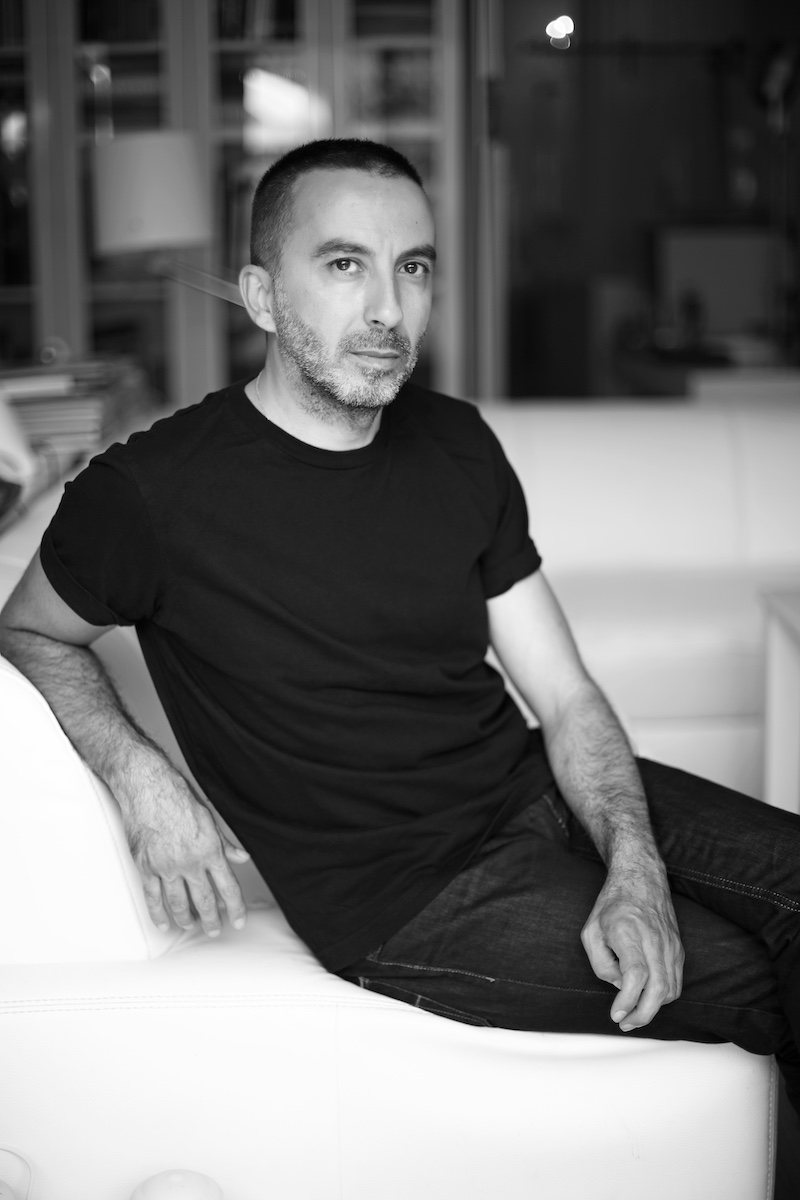
Taner Ceylan Keep in mind that each painting is actually a self-portrait of the painter. This may help provide some perspective. I chose them as my subjects because their stories resonated with me in a unique way.
P You shared a quote from Jean-Auguste-Dominique Ingres about his painting La Princesse de Broglie, which you interpreted in this way: “Why does the most beautiful painting I have ever created cause me so much suffering? Who am I painting, and why? Why does a painter choose to paint someone, and when does he decide to do so? When I look deep within myself, I see only myself reflected in my paintings. The model has always been an excuse. I’ve never appreciated dark spaces, shadows or lifeless, lightless bodies. Light should illuminate everything. Not even the smallest detail should be overlooked. There is no place for sadness, grief or sorrow in my world. From now on, I will no longer accept commissioned paintings. I will never accept any commissions again.” What resonates with you in these words, and why are these words important to you?
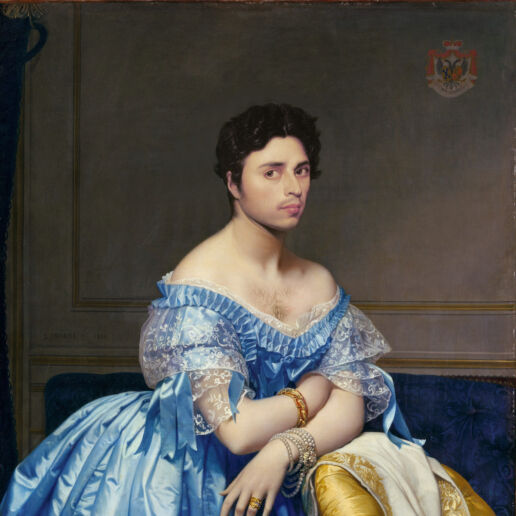
TC We know that the painting of the Princesse de Broglie caused Ingres a great deal of trouble. The painter faced heavy criticism because the princess represented something far removed from her true personality. This criticism profoundly affected Ingres. In reality, the princess was an intellectual and conservative introvert who owned little more than a few books. However, Ingres’ depiction of her was entirely different. The image you see reflects the exact opposite of these traits. Critics accused the painter of portraying himself instead of his model. Indeed, the painting was not exhibited for years. While the princess’ family did not disown the painting, they also chose not to display it. This was my main concern. I wanted to emphasise that the painter had portrayed himself, so I placed Ingres’ self-portrait on the princess’ head. I also painted her head on a separate canvas. This was my way of distinguishing between the two characters. I meted out justice in my own way.
P What does it mean to you to depict the celebrated Cahide Sonku and Afife Jale? How did you connect with your personal story or emotions while portraying these two powerful female figures?
TC What stands out most are the incredible experiences these women had. They were bold and vibrant individuals, pioneering risk-takers. I don’t need to stress how talented they both were. Additionally, the way they have been portrayed in art thus far disturbs me. No one seems to fully understand their realities. I wanted to interpret them on their own terms while also revealing another aspect of myself through their stories. It would be quite presumptuous to claim that there are similarities between us. Of course, I have had some wild experiences and I don’t want to shortchange myself. Thankfully, I am receiving recognition. There are many more women with similar narratives who are not being recognised. Recently, I have been focusing on Mihri Müşvik Hanım.
P Sadness and courage resonate deeply in the stories of the women you depict. How do you connect with these two qualities?
TC I believe we share common ground: We are embracing new challenges, identifying what is lacking, and actively working to bridge that gap. However, we all acknowledge that being a woman in Türkiye remains very challenging. Just think about what life was like a century ago. We can hardly fathom the obstacles they encountered.
P How do you believe your style has evolved over the years? What changes have occurred in terms of your artistic approach, techniques or narrative during your journey from works like Karanfil Hasan to the pieces you’ve created more recently?
TC There’s one constant rule in my creative process: What I do must first make my heart race. Only then can I inspire that same feeling in others. What excites me and what I’m interested in, change naturally over time, and so does my art. As I mentioned, Istanbul has been my main theme recently. Colour has faded from my paintings. I believe emotion is felt more powerfully when colour is balanced with black and white. However, I now have Afife, which stands out as a colourful painting. The characters I portray represent modern Türkiye. Nevertheless, one thing remains unchanged. I emphasized this in 1881. When it comes to emotions, there’s no difference between the present and the past. Our joy, sadness, anger and grief; everything stays the same.
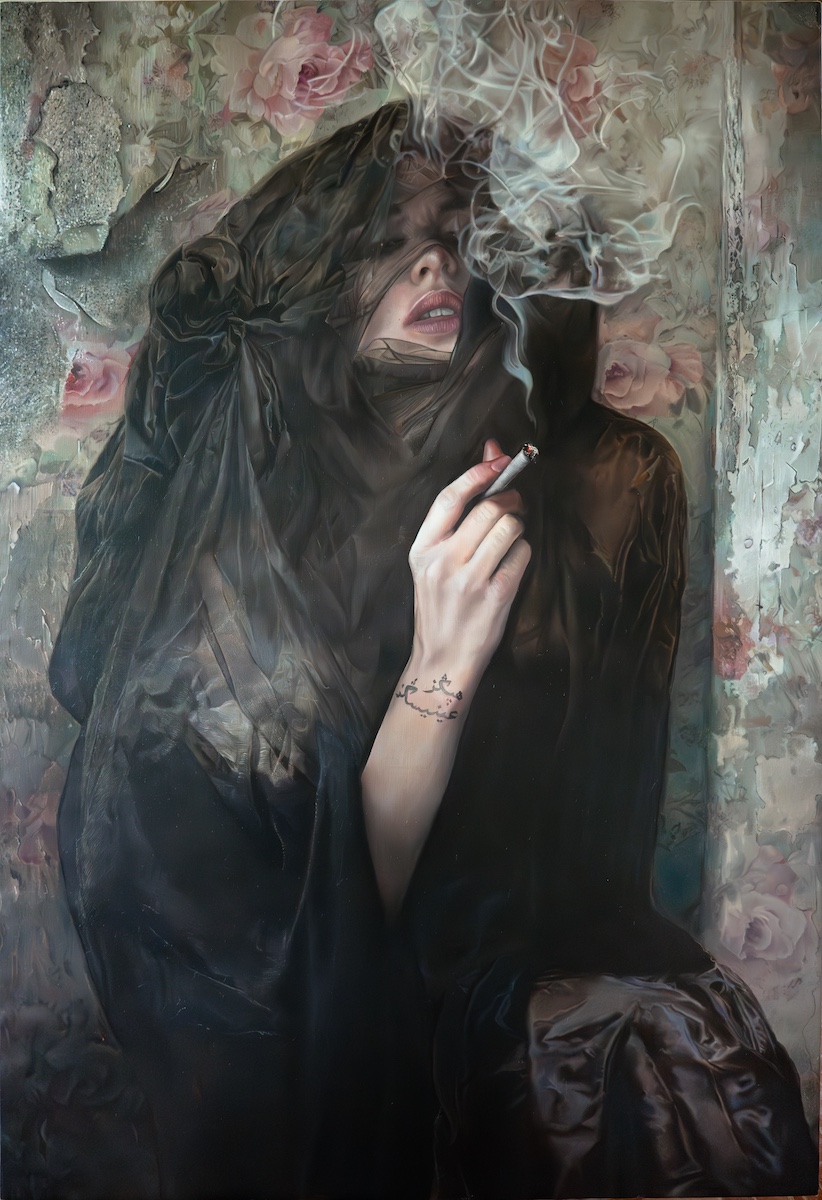
Afife, 2025, Oil On Canvas, 200x135 cm
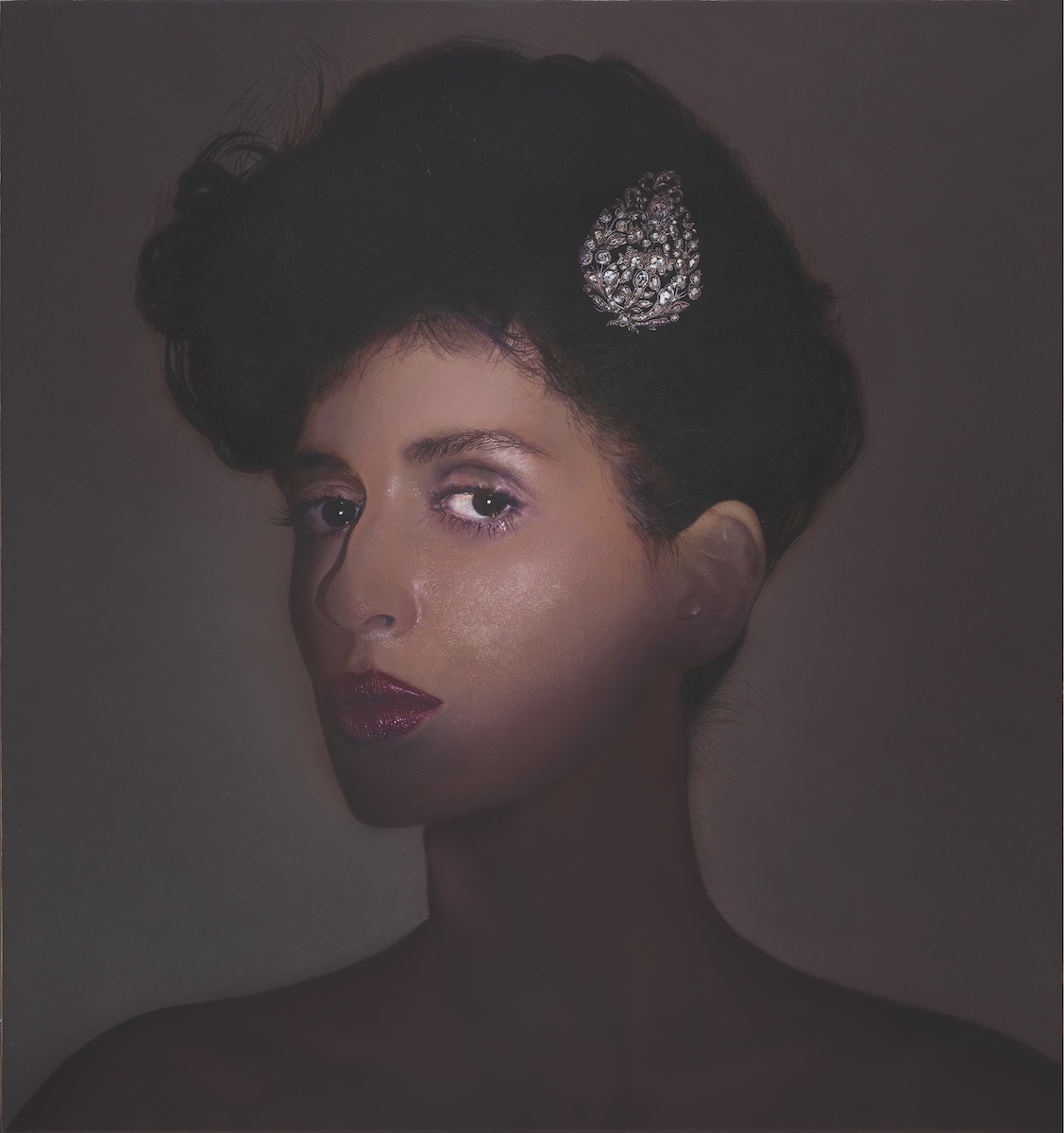
Taner Ceylan, Esma Sultan, 2012, oil on canvas, 180 x 170 cm
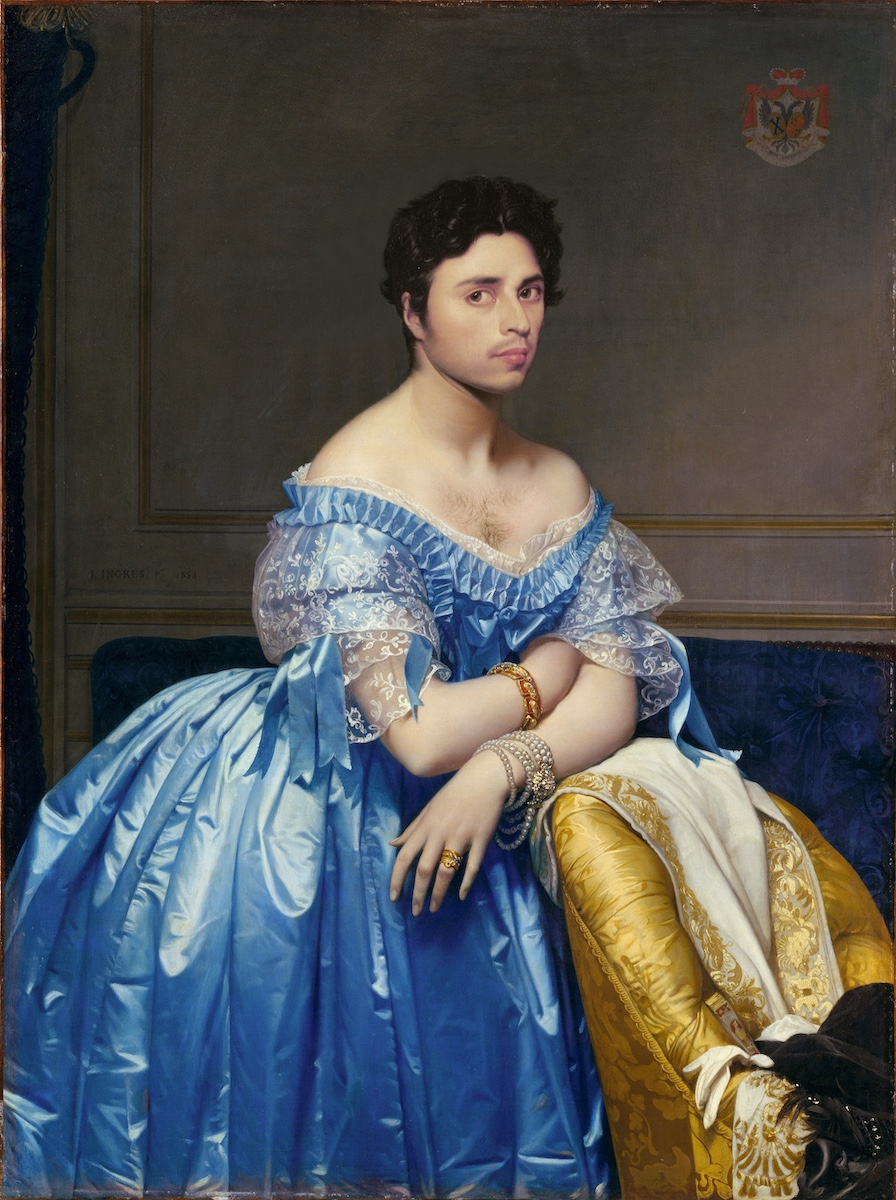
Taner Ceylan, Princess Broglie, 2015, oil on canvas, 40 x 30 cm
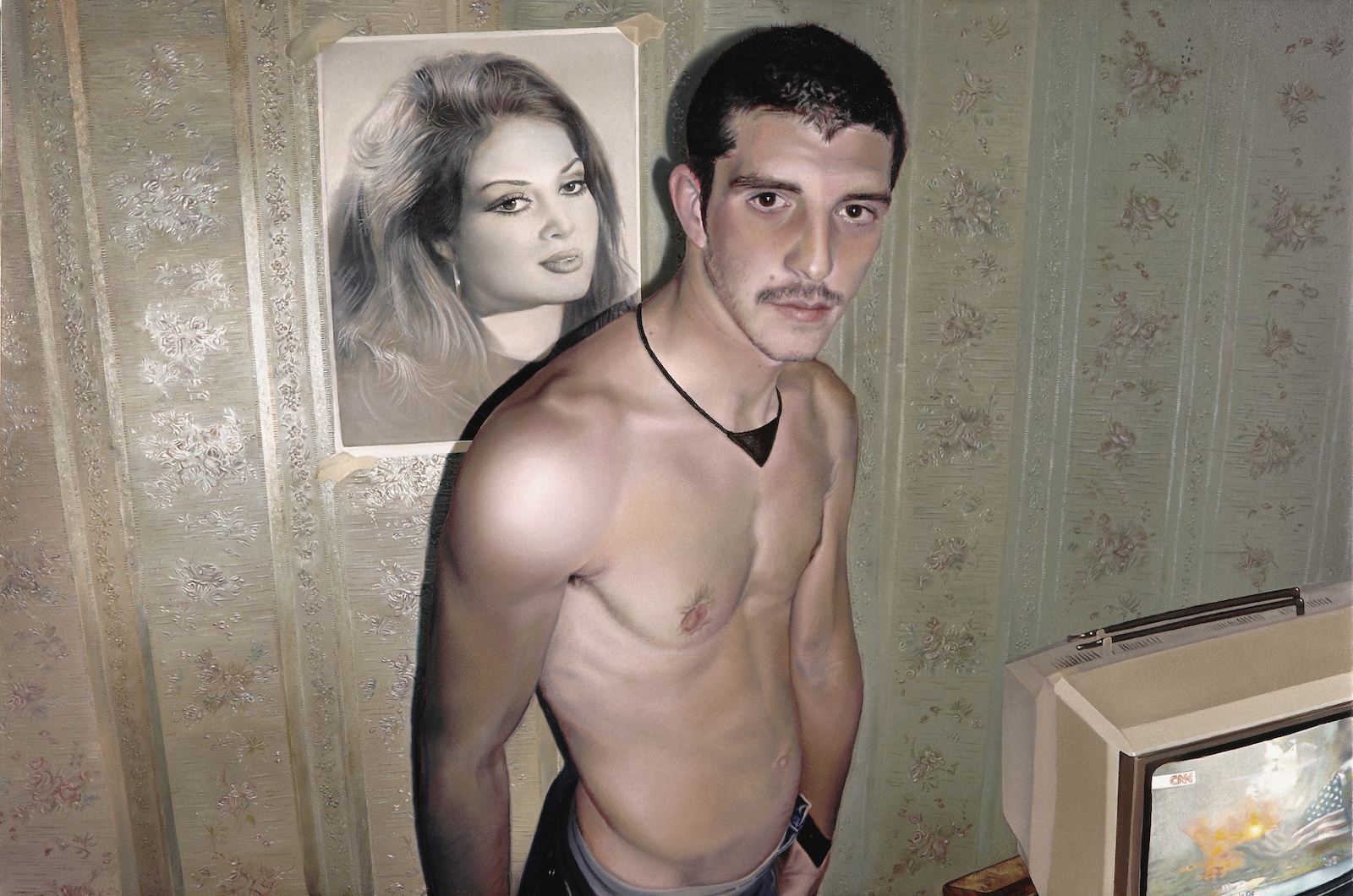
Taner Ceylan, Karanfil Hasan, 2006, oil on canvas, 80 x 120 cm
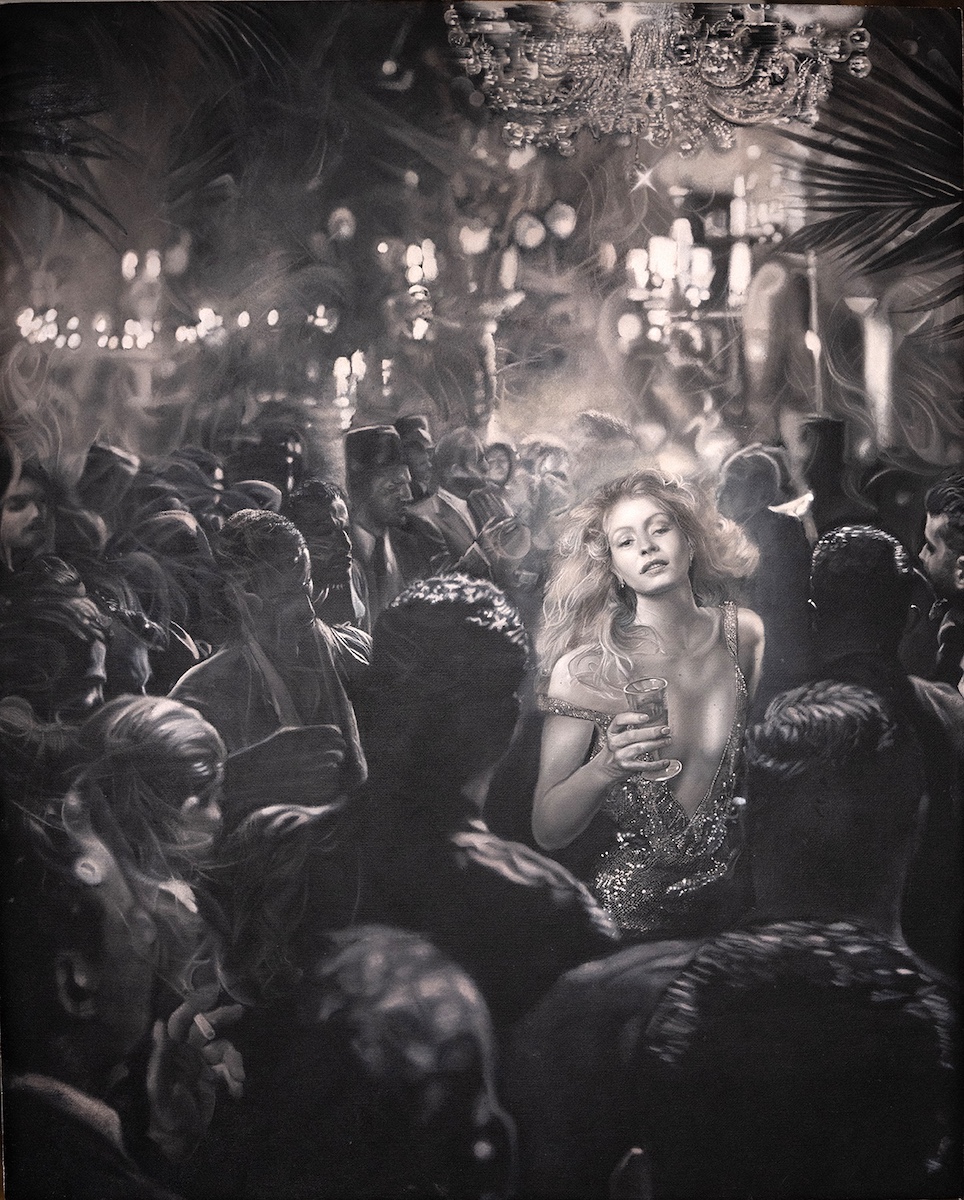
Taner Ceylan, Cahide, 2024, oil on canvas, 105 x 85 cm