
JAY OSGERBY
Jay Osgerby’s design philosophy is a reminder that less can be more meaningful and that thoughtful design can challenge the limits of time. From the London 2012 Olympic Torch to creations that evoke the language of quantum physics, his work proves that behind every seemingly simple form lies a bold idea.
Istanbul has a way of surprising and enchanting you, even if you were born and raised here. Despite its chaos and relentless turbulence, it still finds moments that make you fall in love with it all over again. The Mozaik “Design Dialogues” talk with Jay Osgerby, which I attended recently, was one of those moments for me, both for its setting and its content.
Jay Osgerby, who together with his partner Edward Barber, has been designing furniture, products and spaces for over 30 years under their studio Barber & Osgerby, gave a talk at Mozaik’s Ortaköy showroom as part of a collaborative project with Vitra. The modern&classics furniture collection displayed by Mozaik was just as exciting as the conversation itself.
Osgerby began by explaining that, as the duo who designed the London 2012 Olympic Torch and created countless projects for global brands such as Rimowa, IBM, Rizzoli, Supreme and Flos, their greatest dream from the very beginning had always been to work with Vitra. He recalls the years when he and Edward Barber first met while studying architecture at the Royal College of Art and would pore over Vitra’s chair campaigns from the 1980s featuring artists, designers, architects and musicians: “Vitra represented a completely different vision for us as students, it opened the doors to design.” He describes Rolf Fehlbaum, the designer who led the family-run company at the time, as their hero. “One day we gathered all our courage and wrote him a letter. We packed all our excitement and knowledge into it and even though it felt like a long shot, we took the risk. Then one day, unexpectedly, we received a phone call from Fehlbaum inviting us to his office and that became the turning point for everything.”
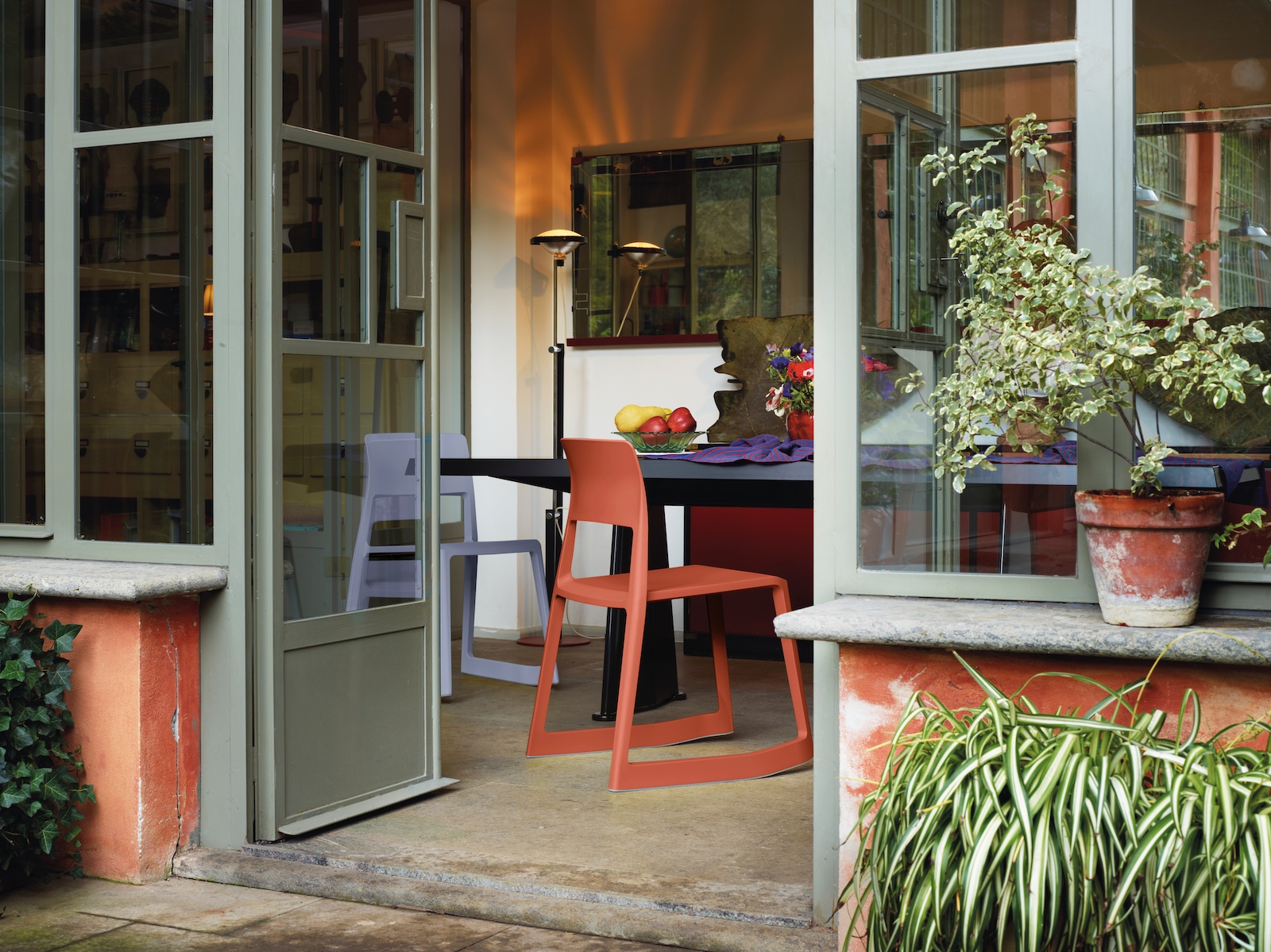
After that call, Barber & Osgerby achieved not just one but several successful projects with Vitra. One of the reasons for the talk we attended was Tip Ton, the chair they designed for Vitra in 2011. Though playful in color and seemingly simple in form, the story of this chair began not with a sketch, but with a question: “How can we create school furniture that enables movement without relying on a mechanism?”
TIP TON CHAIR
After nearly two and a half years of development; during which a Jasper Morrison chair was taken apart for experimentation, Tip Ton emerged as a one-piece, injection-molded design containing no mechanical components. At first glance it reveals nothing of its ingenuity, yet it allows the sitter to tilt a few degrees forward with a gentle shift of weight. This forward-leaning posture aligns the pelvis and spine, improving circulation to the core and back muscles, while also giving users a playful range of motion. Named after its first testing site, TipTon Academy, the chair offers a joyful experience not only for students but for anyone who fidgets or struggles to sit still. Inspired by children rocking back and forth on their chairs, Osgerby adds: “We took a motion assumed to be unhealthy for the spine and transformed it into a healthy forward-leaning posture.” Having exceeded one million sales in fourteen years, the design has undeniably earned its place among iconic furniture pieces. It is also made from 100% recyclable plastic.
OLYMPIC TORCH
When you look at the duo’s body of work; drawn from the subtle details of a world that is constantly changing, it may seem as though creating iconic designs is something they accomplish with ease every day. Yet one of the designs Jay cites as most impactful, the Olympic Torch, reveals how much they love pushing the boundaries of possibility. Winning a competition with a thousand participants was only the beginning; they then had just 18 months to create a torch that could withstand mountaintop storms, underwater conditions and extreme temperature changes. It is regarded today as one of the most robust torch designs in Olympic history.
Their iconic contributions extend well beyond product and furniture design. Their early milestones include designing artist Damien Hirst’s Pharmacy Restaurant and fashion designer Stella McCartney’s stores. “Designing retail spaces taught us how objects should exist within an environment,” says Jay. His most exciting recent project, however, involves transforming an invisible, intangible technology into a comprehensible form. “We took IBM’s quantum computer; essentially rooms filled with intertwined cables, and turned it into a clear form that people can look at, understand, feel the essence of quantum physics and even interact with.” His words draw reactions of “Incredible! Wow! But how?” from the audience.
When asked about the future, Jay’s answer is both hopeful and inspiring, unsurprising for someone shaping it through design. “I feel responsible for designing less, but designing more consciously. A product should justify its existence only if it improves life. I see how overproduction erases meaning, while simplicity creates space for memory. Our task is to restore meaning to the objects and spaces we design so that they can endure and be passed from one generation to the next.”

Jay Osgerby portrait by Ivan Kašša
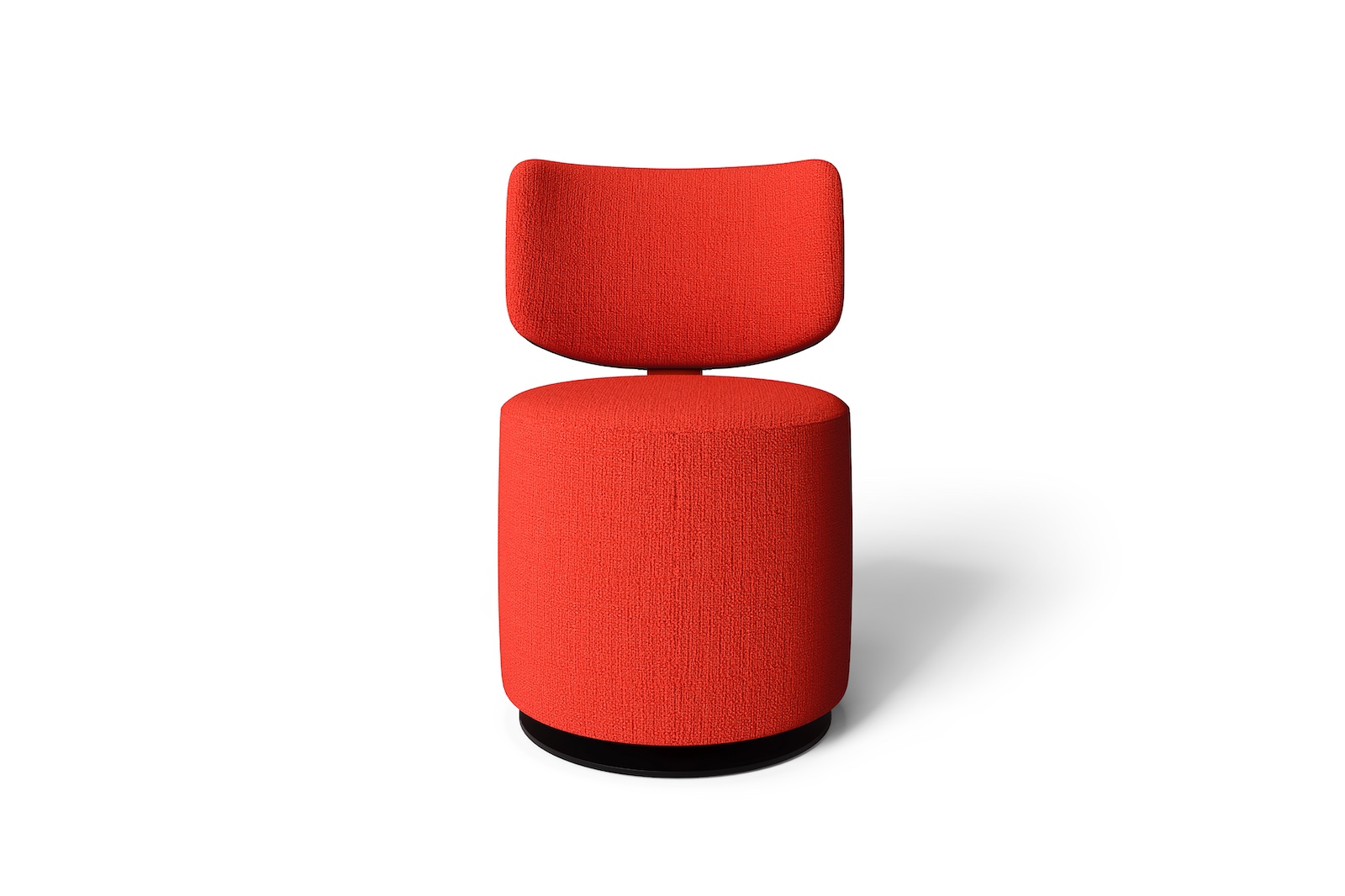
Tamburound Chair
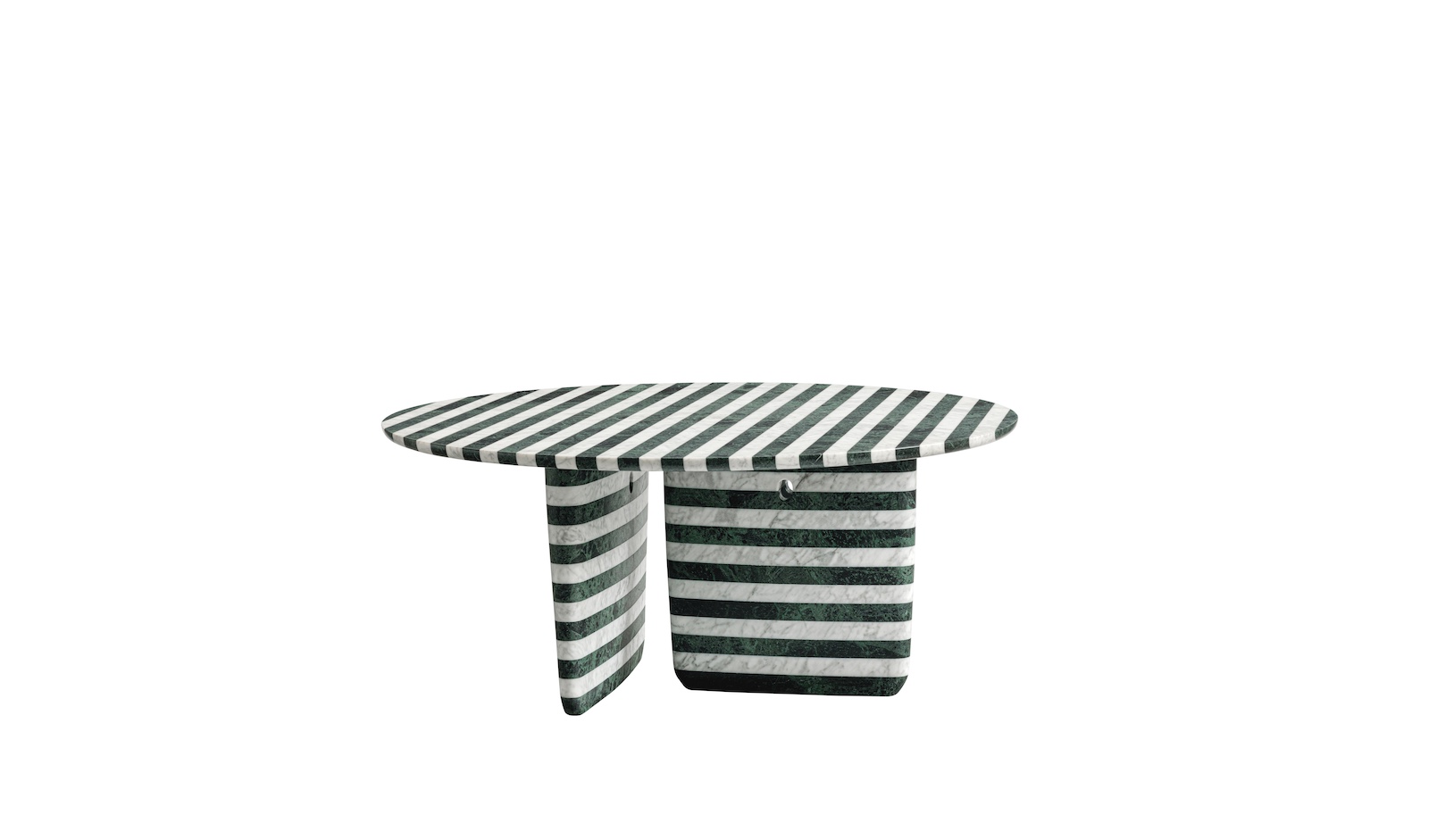
Tobi - Ishi Table
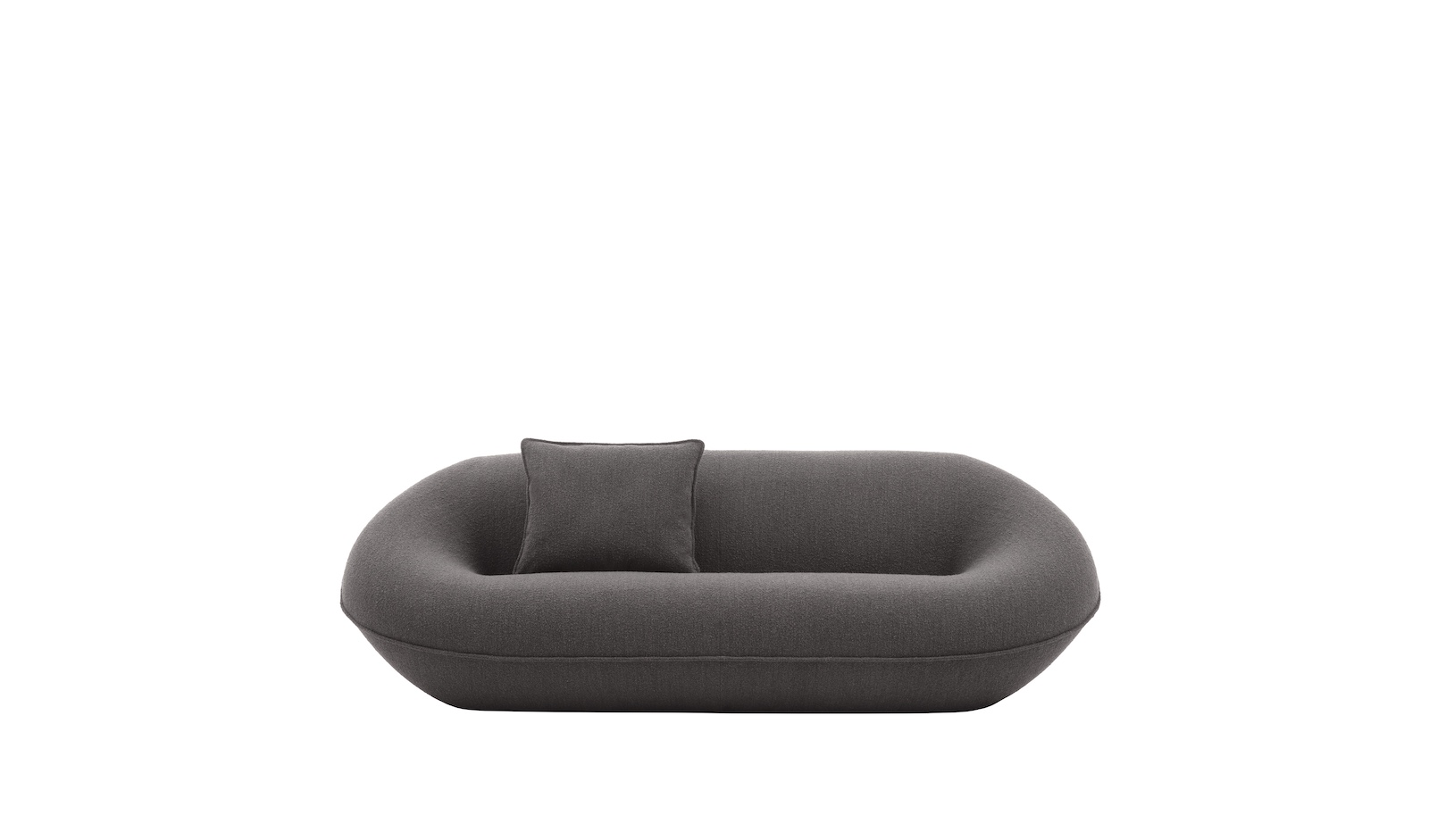
Tortello Sofa
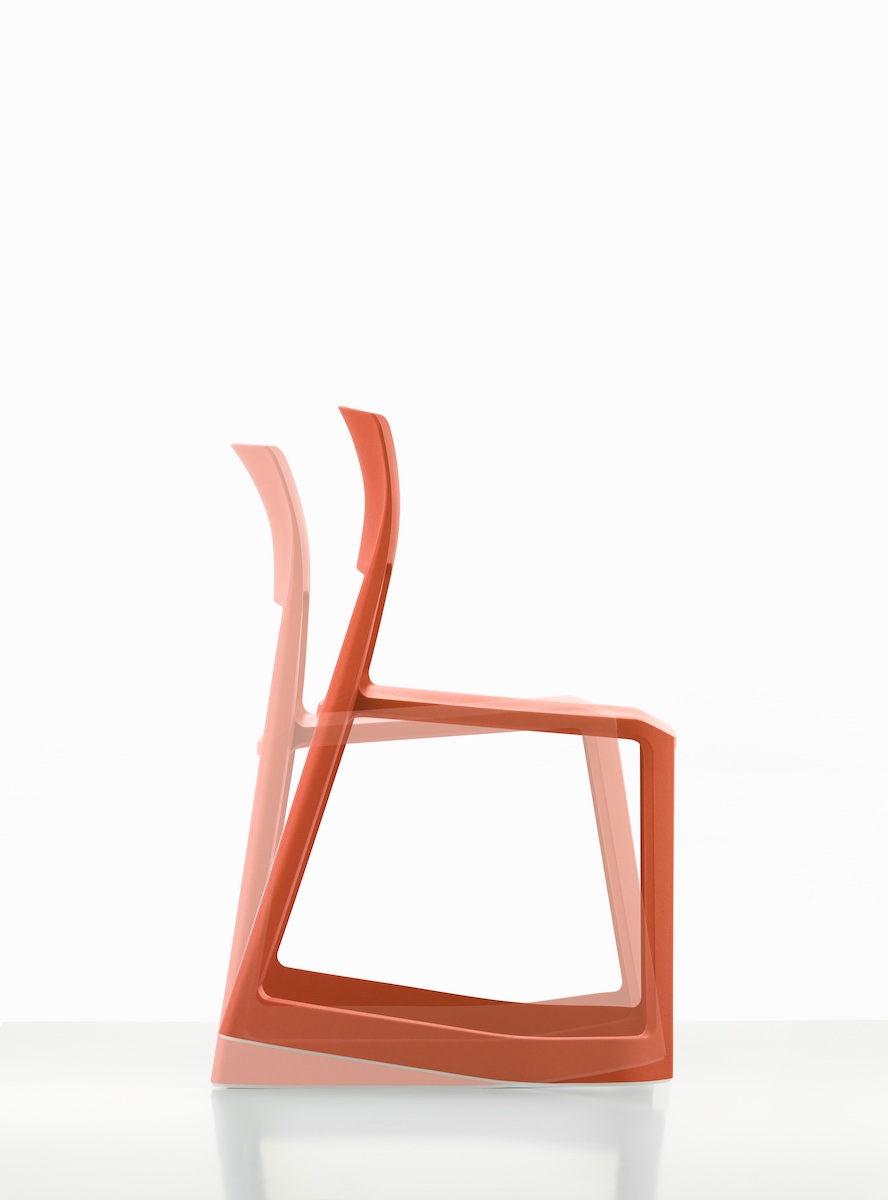
Vitra Tip Ton RE moving-forth coral
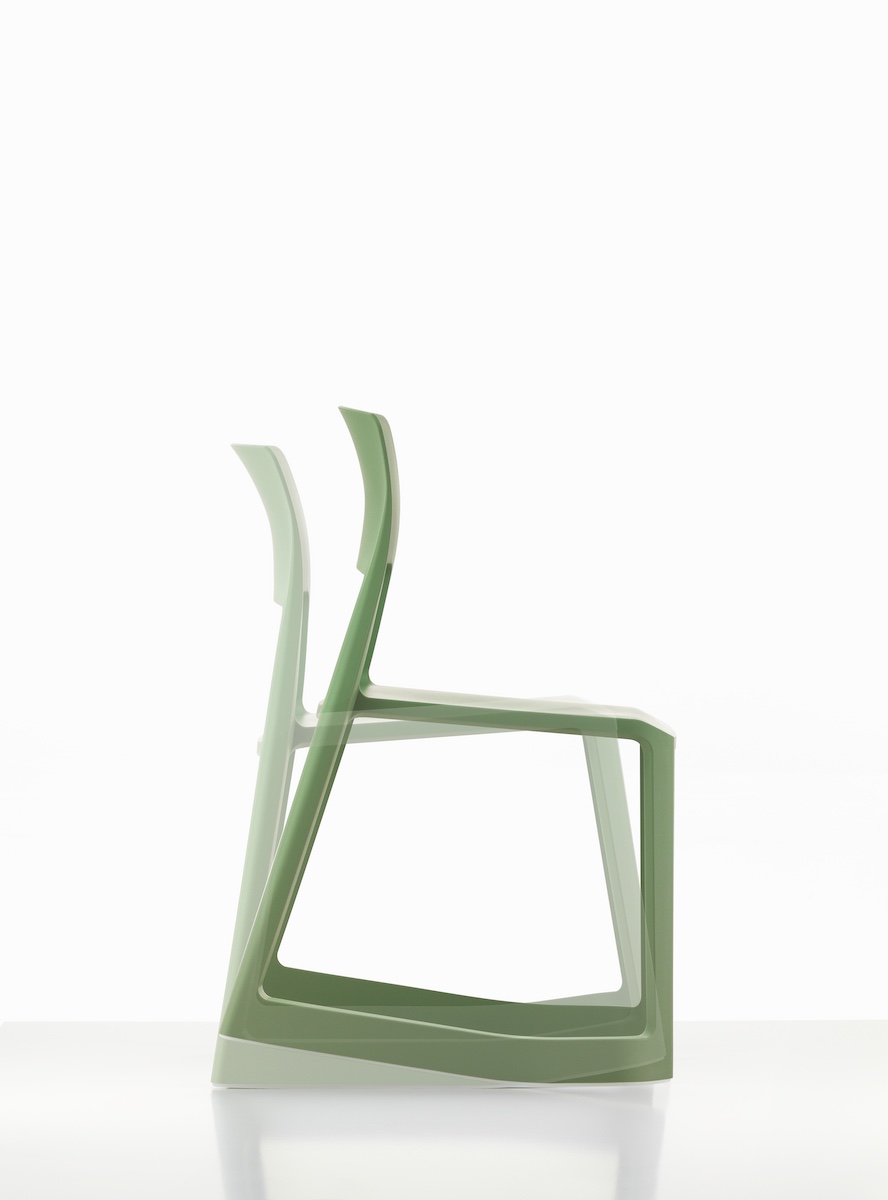
Vitra Tip Ton RE moving-forth industrial green