

ANATOLIAN RITUALS: The Timeless Exchange of Ancient Wisdom
This is a tribute to the ancient wisdom of Anatolia, where, over millennia, people of diverse cultures have adapted to the rhythms of nature. They have assigned meaning and curative powers to plants and animals and come to believe in the deep power of words, places, and people. Here, we explore how primordial rituals have influenced modern spiritual practices and how the culture and beliefs peculiar to this cradle of civilisations have been woven, with great richness, into today's Anatolia.Illustrations Amit Greenberg
A Transition Period: 40 days
People have assigned significance to the number forty across nearly every belief system, from shamanic traditions to Abrahamic religions. Special rituals connected with this number can also be found in Anatolia, a crossroads of various cultures. Noah navigated his ark through a flood that lasted for forty days and forty nights. The dome of St. Sophia is supported by forty columns topped with forty windows. At the age of forty, Confucius no longer suffered from perplexities. In fairy tales, weddings last for forty days and forty nights. In Türkiye, there are forty-day rituals that continue to this day, the most common being the forty-day period observed after birth or death. Colloquially referred to as ‘kırkın çıkması’ (first forty), this period is dedicated to mourning the deceased or recovering after birth and bonding with the newborn. Specific rituals are performed on the fortieth day in both cases. In the event of a death, a commemoration ceremony occurs at home on this day, influenced by beliefs in some shamanic traditions that the soul departs the body after forty days. Postpartum mothers receive support throughout the forty days following birth, during which it is recommended that the mother and baby stay indoors to ensure their well-being. Special rituals are often held on the fortieth day. The baby and mother are washed with forty spoons of water from a bowl containing forty stones. This ritual, known as “kırk uçurma”(fleeting forty), aims to protect them from malevolent spirits and evil.
Warding off Curses, Breaking Spells: The Evil Eye or Nazar Amulet
Evidence suggests that the evil eye curse dates back to the Neolithic Age. In Turkish, “nazar” comes from the Arabic word “nẓr,” meaning to look or glance. This concept arises from the belief that great success or recognition often attracts envy from others, manifesting as a curse unleashed through malicious stares. As Frederick Thomas Elworthy wrote in his 1895 book, The Evil Eye: The Classic Account of an Ancient Superstition, the curse appears in many cultures, from Greek mythology to Irish folklore. There are conflicting opinions on why the eye amulet is blue. Plutarch suggested that the human eye could emit invisible rays of energy and that those most skilled at casting the curse were blue-eyed. This belief may stem from the fact that this eye color is a genetic rarity in the Mediterranean basin. Others provide a more practical explanation: the copper and cobalt in the highly oxidized Egyptian clay turn blue when fired. In any case, the blue eye amulet spread across the world once glass production reached industrial levels. It is believed that a person with evil intentions can crack an eye amulet by staring at it or touching it. Perhaps it is the profound meaning of the word or the power attributed to negative energy, but one thing is certain: the ocular amulet appeals to all cultures and socio-economic groups. People hang them in their homes, offices and vehicles and wear them as jewelry. It has also recently become a global fashion statement. From Kim Kardashian’s jewelry to Gigi Hadid’s shoes, it is in plain sight wherever one looks. As the designer of the cover for the latest issue of Sanayi313 PAPER, performance artist Nezaket Ekici drew inspiration from the amulet’s power to ward off the glaring eyes of the malicious: She walked the entire length of Istiklal Avenue in her forty-kilo dress adorned with 600 evil eye beads for protection.
A Culinary Expression of Gratitude: Aşure or Noah’s Pudding
Aşure is arguably one of the oldest recipes in the world. This tradition is believed to have originated in ancient Sumer, was later reinterpreted by Jewish communities, and became a ritual in pre-Islamic Arab society. In Anatolia, it can be traced back to the Great Flood myth. It is said that aşure was prepared by Noah’s family after the Ark washed up on Mount Ararat. The family combined any remaining ingredients they had to create a dish celebrating surviving the deluge. For this reason, aşure represents abundance, unity and gratitude. Although numerous variations exist across different cultures, in Islam, aşure is traditionally prepared on the tenth day of Muharram in the Hijri calendar. It symbolises Noah’s survival during the flood and Moses’ escape from the Egyptian pharaoh. In modern times, this dessert is made throughout the month following the tenth month. Even in major cities like Istanbul, this heartfelt ritual continues to connect friends, neighbors and even strangers through a shared cultural memory.
Pınar Taşdemir, the founder of Araka and Türkiye’s first female chef with a Michelin star, interprets her mother’s aşure recipe for Sanayi313 PAPER:
Aşure (20 servings)
Ingredients:
450 gr wheat
150 gr chickpeas
150 gr beans
100 gr rice
200 gr raw almonds
150 gr pistachios
25 gr dried sultana raisins
Cinnamon stick
Cloves (optional)
7-8 dried figs
Finely shredded peel of 1.5 oranges (not zest)
Instructions:
Soak the chickpeas, beans and almonds overnight. Boil the chickpeas and beans separately until they are soft, then drain and allow them to cool. Set aside the water. Remove the skins from the almonds by blanching, using boiling water, if the skins are difficult to remove.
In a large pot, cook wheat and rice in 5 litres of water on very low heat, with the lid closed, for three to four hours. I love spelt, but if you prefer this hard wheat as I do, make sure to soak it overnight.
Next, add the sugar to the pot and mix well before adding the chickpeas, beans, almonds, pistachios and raisins. Throw in the cinnamon stick and keep simmering on low heat. Add the orange peel shreds. To prevent discolouration, add the chopped figs last. My mother does not use cloves, but I do. I also like to add a little geranium or lemongrass, or, if you have neither, a little lemon juice.
Celebrating the Arrival of Spring and Rebirth: Hıdırellez
According to Turkish folklore, a fabled snake hibernated with three embers in its mouth. As it awoke, these embers, known as cemre, would fall from its mouth one at a time, one week apart. The first cemre to fall warmed the air (on February 20). The second warmed the water, melting snow and ice while the third and final one warmed the earth. Most people in Türkiye know that the falling of these invisible embers signifies the arrival of spring and indicates that the Hıdırellez Festival (May 5-6) is just around the corner. My mother has an annual tradition of calling me about Hıdırellez, reminding me to write my wishes on a piece of paper and tie them to a rose plant. We practiced Hıdırellez to express our wishes long before spiritualism became a global trend, long before vision boards and New Year’s resolutions.
According to another belief, Prophet Al-Khidr, who became immortal after drinking from the fountain of youth, aids those in trouble on land, while Prophet Elijah assists those in distress at sea. The two prophets come together every year on May 6, a day celebrated with Hıdırellez. This event marks the awakening of nature, the celebration of blossoms and a ritual of gratitude for life and vitality. Celebrated in a festive atmosphere, often outdoors with picnics, Hıdırellez essentially honors spring, symbolising new beginnings and rebirth. Many rituals commence on the night of May 5. One of the most popular involves jumping over a bonfire, believed to purify one from evil and restore vitality after the sedentary winter months. Another enduring ritual involves writing wishes on pieces of paper and tying them to a tree along with money. On May 6 at dawn, these papers and money are collected. The banknote is kept in a wallet for one year, while the papers are tossed into the sea or river. At home, all the kitchen cupboards are left open to invite abundance into the house. Another miracle, believed to occur only on that day, involves making natural yogurt. Typically, yeast must be added to raw milk for it to ferment and turn into yogurt. However, on that night, it’s said that Al-Khidr’s yeast is at work, as some people add nothing to the milk, while others add dew, collected from plants before dawn . The rituals of Hıdırellez are endless, making it the most magnificent celebration of spring in Anatolia.
A Ceremony for Repelling Evil Energies: Molybdomancy
Believed to have shamanic origins, molybdomancy is a divination technique that uses molten metal. Like many rituals, lead pouring is traditionally performed only by women viewed as the family’s “healer,” ideally those who have inherited this duty consensually from an elder. The healer drapes a cloth over the troubled person and melts lead in a ladle over a flame positioned above their head. The molten metal is then poured into water. The resulting shapes are interpreted to reveal the nature of the curse, including the gender of the person who cast it and whether it affects the individual or the entire household. Dark, porous shapes suggest a severe curse, while smoother shapes with a brighter shine indicate that the curse is more benign.
Bibliography:
- Uca, A. ‘‘Türk Toplumunda Hıdırellez’’, Journal of Turkish Research Institute, 2010.
- Güzel, Ö. Anadolu Halk Kültüründe İnanış ve Ritüeller: Teoriden Pratiğe Köken ve Yansımalar, 2021
- Deniz Gezgin, Doğa Defteri Gündönümleri, Fırtınalar, Uçanlar, Çiçek Açanlar,
- Quinn Hargitai, “The strange power of the ‘evil eye”, BBC Culture, 2018.
- Turhan Tuna, S. “Birliğin, Beraberliğin, Huzurun Aşı Aşure”, SMART Journal (Social Mentality and Researcher Thinkers Journal), 2018
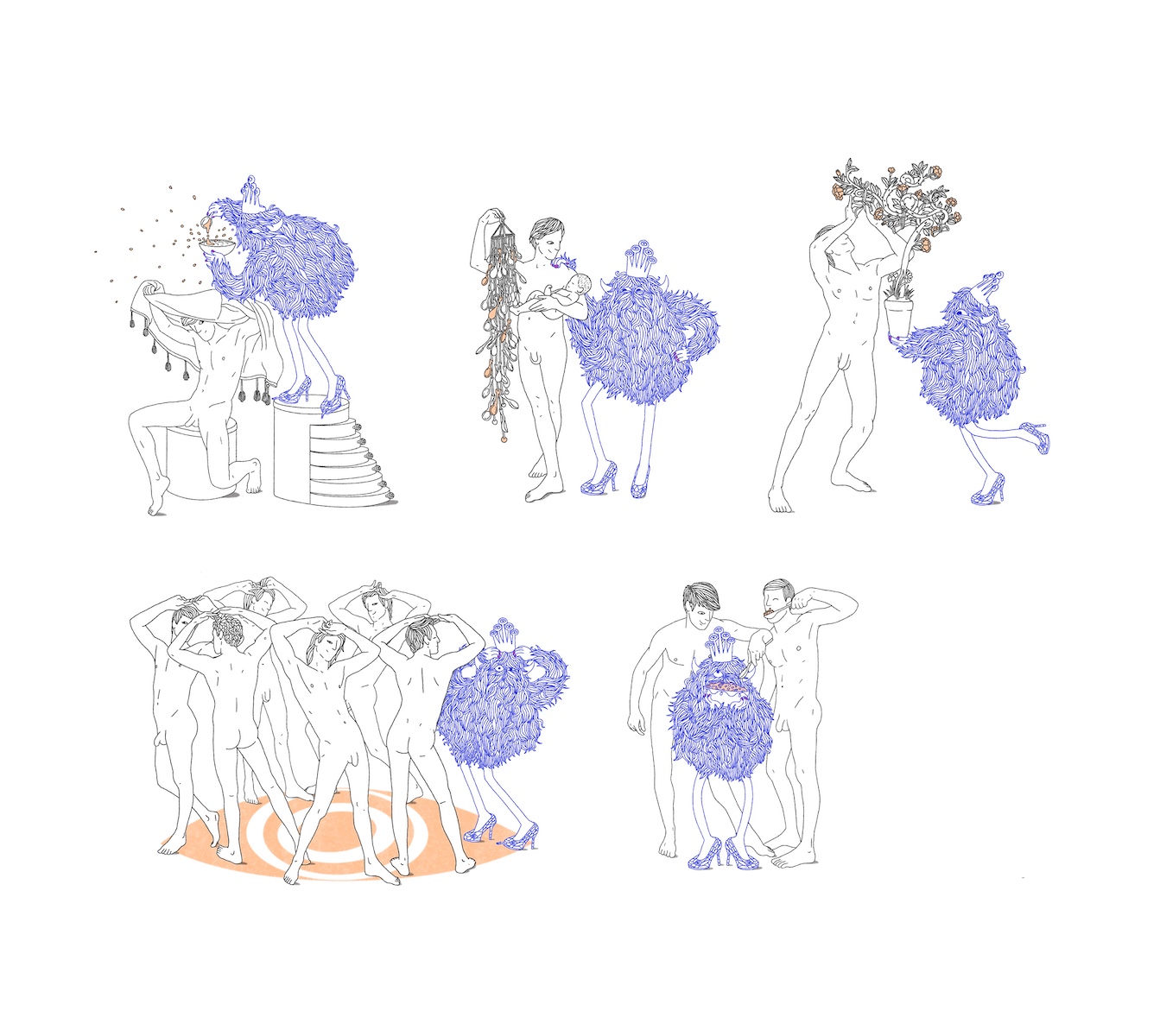
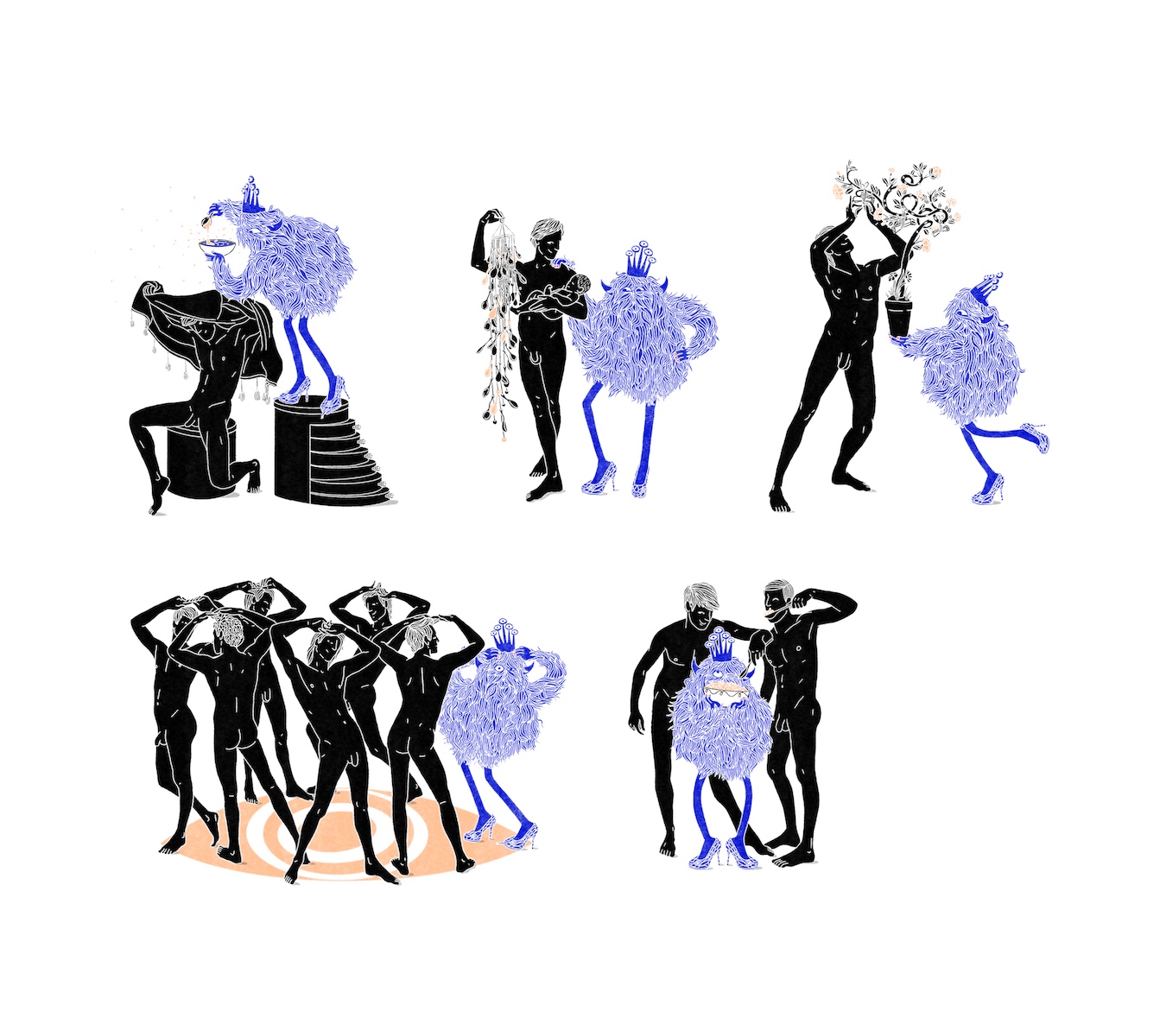
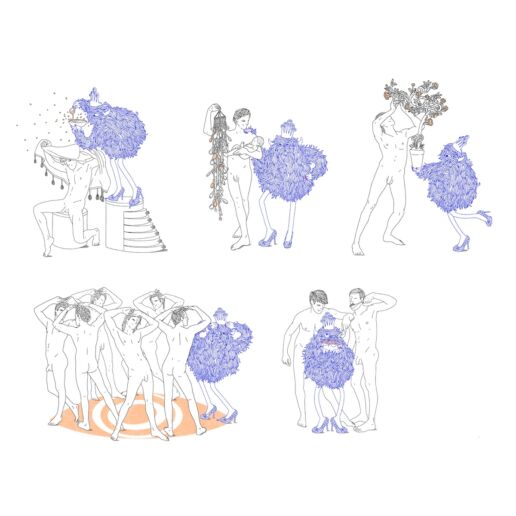
In these illustrations, Amit Greenberg finds inspiration in Anatolian ritual. Greenberg explores the stories, the gestures and the energies that have been woven through them. His blue, fuzzy figure was loosely inspired by Shahmaran, a mythical character that is half-woman and half-snake, but it’s also a surreal embodiment of ritual itself: a playful spirit that hovers somewhere between witnessing and participation.
Who Is the Illustrator Behind Anatolian Rituals?
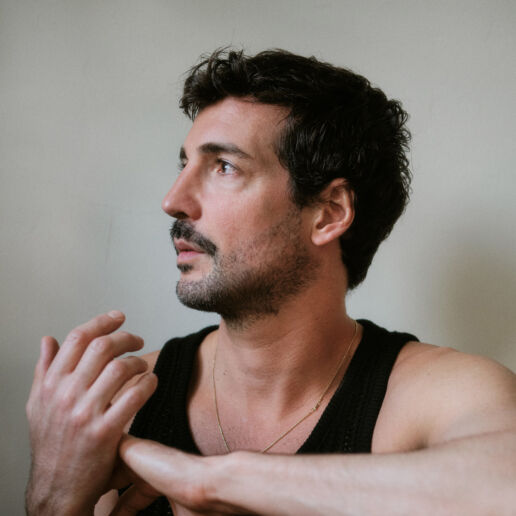
Multidisciplinary artist Amit Greenberg (aka This is Amit) shares the creative process behind his surreal, symbolic illustrations, exploring the emotional pull of tradition, gesture and storytelling.
SİDNİ KARAVİL
PAPER What was your initial reaction to the theme of Anatolian ritual and how did you approach this project?
AMIT GREENBERG I was immediately drawn to it. Rituals have always fascinated me, not just as cultural practices but as emotional and symbolic languages. They carry memory, rhythm and a kind of invisible logic. My first instinct was to immerse myself in the textures of Anatolian traditions: the objects, the symbols, the folk stories. But I also focused closely on the gestures, the movements. From the beginning, I approached the drawings like a silent dance. I wanted the figures to feel as if they were in motion, as if they were actively performing a ritual across the pages.
P Your work is full of playful surrealism, yet here you’re interpreting something deeply cultural and historic. How did you find the balance between the two?
AG That balance is something I’m always navigating. I have a deep respect for tradition but I also see it as a living, evolving thing, something that belongs to everyone it touches. For this series, I introduced a blue, fuzzy character who acts as a surreal guide through the work. Loosely inspired by Shahmaran, the mystical creature from Turkish folklore, the figure isn’t meant to be a direct reference. It’s more of a personification of ritual itself, the emotional, sometimes unspoken, pull we feel toward certain practices. It’s soft, ambiguous, a little absurd, the way rituals often exist in our lives. Through this character, I could speak in my own visual language while still staying in conversation with the cultural weight of the material. The gestures of the figures; part dance / part prayer, helped maintain that reverent but dreamlike tone.
P During your creative process, were there particular symbols, stories or moments that stood out or surprised you?
AG Yes, I was particularly drawn to how simple materials hold so much meaning. Bread, water, herbs, thread, these everyday objects are transformed through ritual into tools of magic, healing or connection. I was also struck by how performative many of the rituals are. There’s veiling, circling, washing, offering. These actions often felt more like performance art or spiritual theatre than ancient tradition. That realisation gave me permission to let the figures in my drawings move freely, to stretch, twist, pose and interact like dancers caught in a shared trance.
P What role do rituals play in your own life?
AG For me, the act of creating is a ritual itself. As someone who’s neurodivergent, I move through the world in nonlinear ways but I find structure in repetition, systems and symbolic logic. I often build intuitive frameworks around whatever I’m working on. I have personal methods that help me enter a flow state and make sense of complex ideas. Whether I’m drawing, designing or writing, I’m always trying to organise meaning through gesture, pattern and sequence, like creating my own ceremony to give form to a concept. I think many of us enact rituals without even realising it. These can besubconscious behaviours, repeated thoughts, inherited actions that link us to something older and bigger than ourselves. That blurry place between intention and instinct is something I kept exploring through this project. These drawings aren’t just representations of ritual; in many ways, they are rituals. Each one felt like a small performance or offering, inviting emotion and memory to surface in unexpected ways.
P Would you describe one image you especially enjoyed creating for this series?
AG One of my favorite pieces is a quiet but charged scene: a circle of nude figures locked in a synchronised gesture. Their arms arc upward and outward, forming the unmistakable shape of an eye with each of their heads acting as the pupil. It’s a choreographed representation of the evil eye, not just as a symbol but as a lived, moving ritual. I loved the challenge of capturing movement within a still frame. Even though it’s a drawing, I wanted it to feel like a ceremony in motion, as if the viewer has accidentally entered into a moment of trance or repetition, something ancient being practised again. At the edge of the circle stands the blue, fuzzy character, half-participant, half-guide. This character is not entirely inside or outside the ritual. It is witnessing it, maybe even facilitating it, but there’s a hesitation or curiosity in its posture that I love. That tension between belonging and observing mirrors how we often interact with tradition. Sometimes we’re inside it. Sometimes we’re just watching, trying to understand. To me, that image captures the essence of the project, with its sacred form, surreal presence and the lingering sensation that something meaningful is happening, even if you can’t fully describe it.